

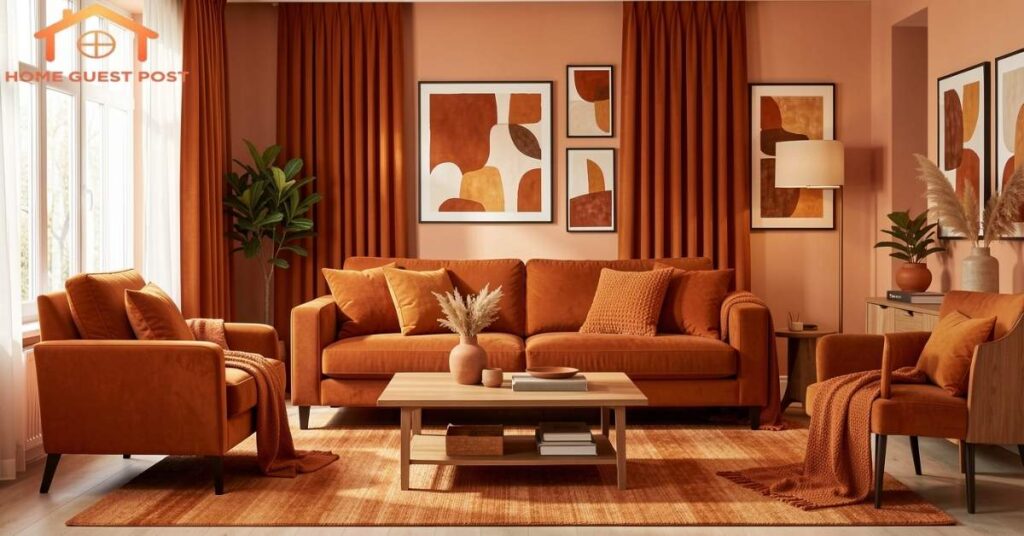
There’s something about burnt orange that just pulls you in. It’s bold without being aggressive. Warm without feeling heavy. And honestly, it’s one of those colors that makes a living room feel genuinely lived-in and loved.
Maybe you’ve been scrolling through home decor inspiration and keep landing on rooms with this rich, earthy tone. Or maybe you already have a burnt orange sofa and have no idea what to pair it with. Either way, you’re in the right place.
Burnt orange sits somewhere between red, brown, and amber. It carries the energy of autumn leaves, terracotta sunsets, and warm spice markets. Interior designers love it because it plays well with so many other colors, from soft neutrals to deep jewel tones. It’s flexible, expressive, and surprisingly easy to work with once you know how.
This guide walks you through 30 real, usable burnt orange living room ideas. Each one covers a specific color pairing so you can find the look that fits your space, your style, and your personality.
Neutral Beige with Burnt Orange Accents
Beige gets a bad reputation. People call it boring, safe, uninspired. But pair it with burnt orange and suddenly that neutral base becomes the smartest decision in the room.
The key here is contrast. A warm beige sofa or linen-textured walls create a soft, breathable backdrop. Then you layer in burnt orange through cushions, a woven throw, a ceramic lamp base, or even a bold area rug. The orange pops without overwhelming. The beige holds everything together without fading into the background.
This combination works especially well in rooms with natural light. When the sun hits burnt orange accents against a beige wall, the warmth multiplies in the best way. Think terracotta pottery on a beige shelf, or a burnt orange velvet cushion on a camel-toned sofa.
If you want burnt orange and beige decor that feels elevated rather than casual, go for textures. Linen, jute, raw wood, and woven baskets add that layered richness that makes a room look styled rather than just decorated.
Industrial Burnt Orange and Charcoal Chic
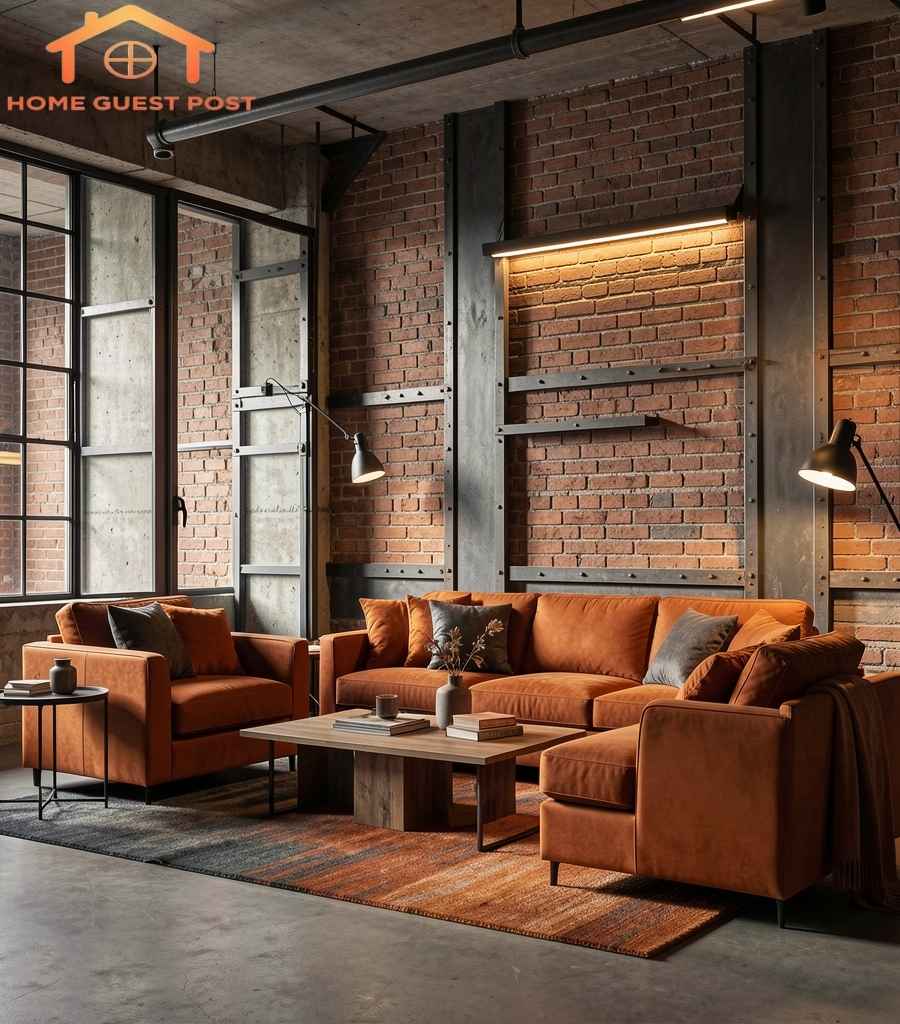
Industrial style is all about raw edges, exposed materials, and a certain unapologetic grittiness. Charcoal walls, concrete-look floors, metal shelving, reclaimed wood. Now add burnt orange into that mix and watch the whole room shift.
The warmth of burnt orange cuts right through the coldness of industrial design. A burnt orange leather sofa against charcoal walls is genuinely one of the most striking combinations in modern interior design. It’s masculine without being harsh. Edgy without feeling unwelcoming.
You don’t have to go all-in either. Even a few burnt orange accent pieces like a pendant light shade, a rust-toned rug, or a set of leather cushions can bring that industrial space to life. Metal and orange have a natural chemistry, almost like they belong together.
For styling, keep lines clean and surfaces minimal. Industrial interiors breathe through negative space, and burnt orange needs room to do its job.
Read More: 22 Cute Blush Pink and Green Kitchen Ideas to Transform Your Space
Burnt Orange and Cream Minimalist Retreat
Minimalism isn’t about emptiness. It’s about intention. And a burnt orange living room done in a minimalist style is one of the most calming, sophisticated spaces you can create.
Cream is warmer than white. It doesn’t create stark contrast but instead builds a soft, cohesive glow throughout the room. Against cream walls or a cream-colored sofa, burnt orange accents feel deliberate and curated rather than decorative.
Think a single burnt orange accent chair beside a cream linen sofa. Or a slim burnt orange vase on a pale cream shelf. The fewer pieces you use, the more powerful each one becomes. That’s the minimalist philosophy at work.
This pairing also photographs beautifully, which is a bonus if you enjoy documenting your home. The color temperature is even, the contrast is gentle, and the overall mood is peaceful. It’s the kind of room that helps you exhale after a long day.
Charcoal Gray with Subtle Burnt Orange Hues
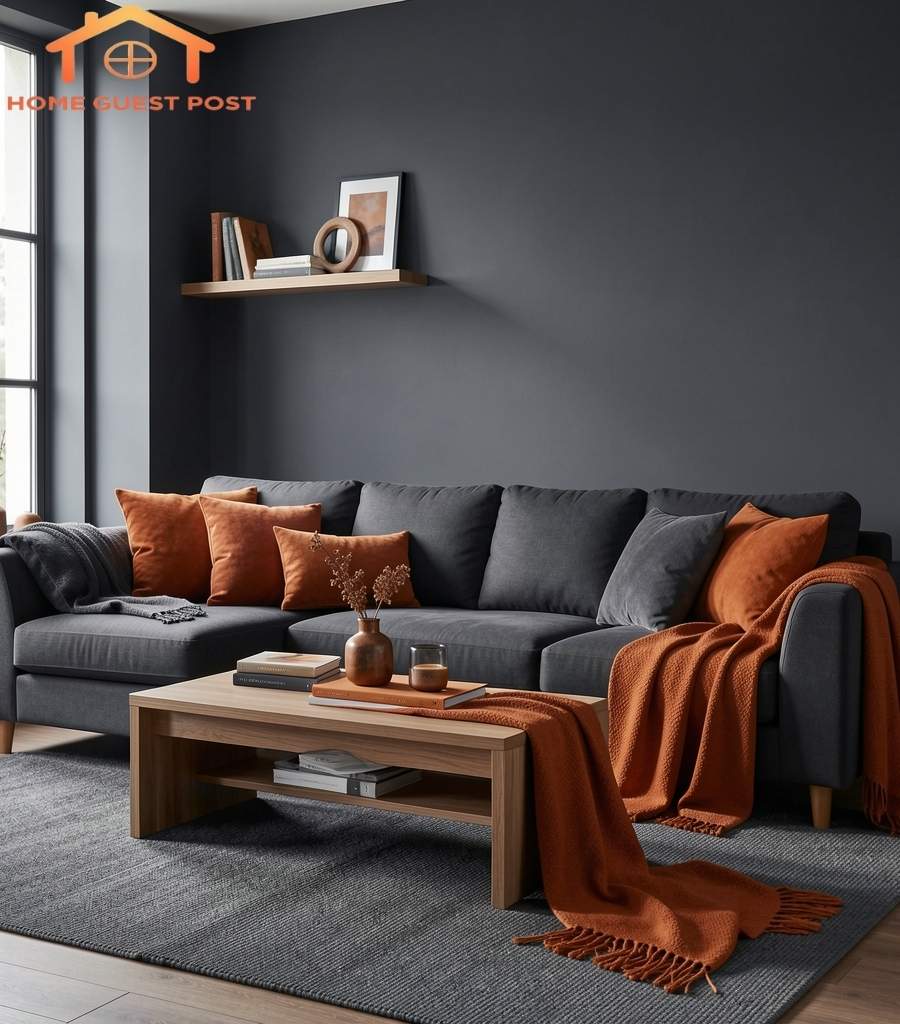
Charcoal gray is one of the most dependable neutrals in interior design. It’s deeper than mid-gray, more sophisticated than navy in certain spaces, and it creates an instantly cozy atmosphere when done right.
When you introduce subtle burnt orange hues into a charcoal living room, something interesting happens. The warmth seeps into what could easily feel like a cold, moody space. Suddenly it feels balanced. Grounded. Like a rainy evening room you never want to leave.
Keep the orange subtle here. A burnt orange and gray living room works best when the orange doesn’t compete with the charcoal but complements it. Try a burnt orange throw draped over a charcoal armchair, or a warm-toned rug with rust undertones on a dark hardwood floor.
Lighting matters more in this combination than almost any other. Warm-toned bulbs bring out the best in both colors. Harsh cool lighting will flatten the whole palette, so stick to soft, amber-toned light sources throughout the space.
White and Wood with Burnt Orange Touches
Scandinavian design has one rule above all others: bring nature inside. White walls, natural wood tones, clean lines, and organic materials. It’s a style that breathes.
Now drop in a few burnt orange touches and you add soul to all that serenity. A burnt orange cushion on a light oak sofa. A rust-toned ceramic on a birch shelf. A woven burnt orange basket near the fireplace. Each piece feels like it was placed there on a Sunday morning with care and a cup of coffee.
The white-and-wood base keeps everything feeling fresh and airy. The burnt orange prevents it from feeling clinical or cold. Together, they hit that sweet spot between calm and characterful.
This is also one of the easiest combinations to work with if you’re decorating on a budget. You don’t need a full room overhaul. A few well-chosen accessories in burnt orange against an existing white-and-wood backdrop can transform the entire feel of a space.
Soft Gray and Burnt Orange Contrast
Soft gray is gentle. It doesn’t demand attention but creates a quiet, refined base that lets other elements shine. And when burnt orange enters the picture, that contrast is where the magic lives.
The beauty of this pairing is that it works across multiple styles. A soft gray and burnt orange contrast can feel modern and graphic in a contemporary home, or cozy and layered in a more traditional setting. It adapts to the supporting details around it.
Use burnt orange as the hero accent in a soft gray room. A single burnt orange sofa against gray walls is a statement in itself. Or scatter it through cushions, artwork, and a patterned rug if you prefer a more distributed approach. Both work.
Pay attention to undertones. Soft gray can lean warm or cool. Choose a gray with warm undertones to complement the burnt orange rather than fight it. Greige, putty, and warm dove gray all work beautifully in this context.
Warm Brown with Burnt Orange Highlights
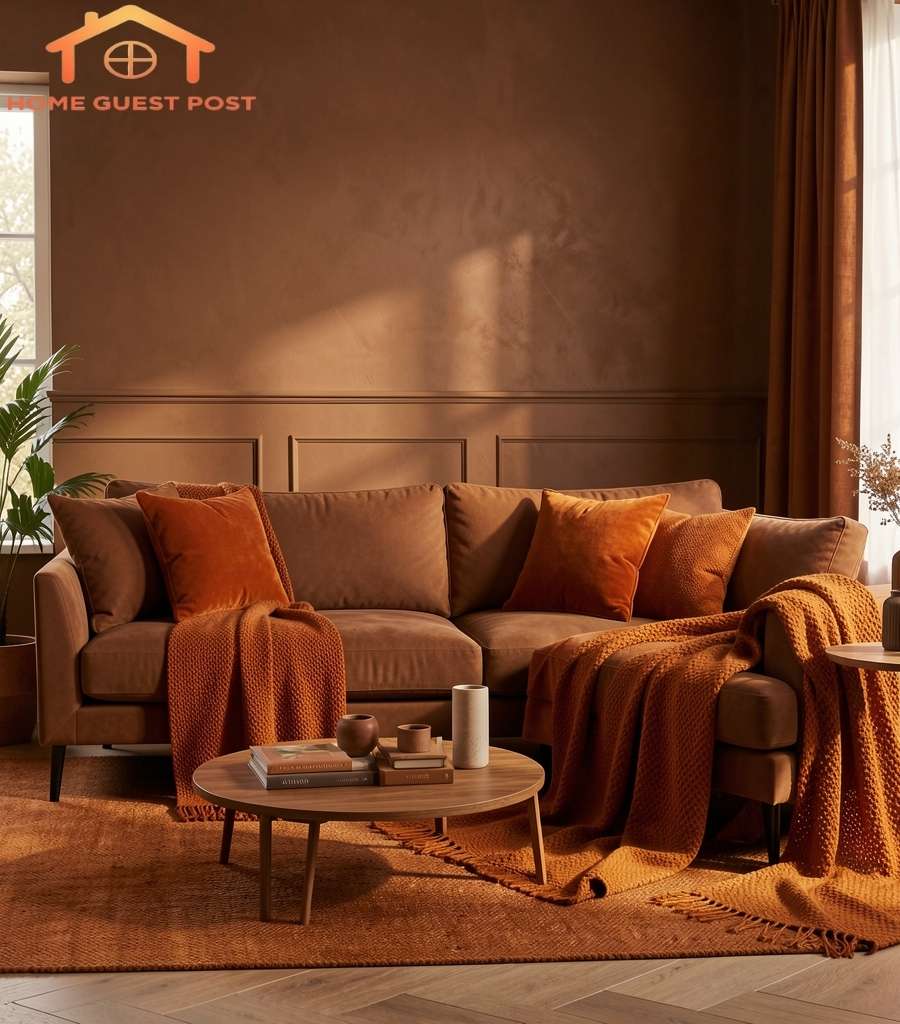
Warm brown and burnt orange are practically family. They share the same earthy DNA. When layered together thoughtfully, they create a living room that feels deeply rooted, organic, and naturally inviting.
This combination leans into nature-inspired design in the best possible way. Think rich walnut furniture, chocolate leather seating, caramel wood floors, and then highlights of burnt orange woven through cushions, lampshades, or wall art. It’s warm all the way down.
The trick is to vary the values. If everything is the same depth of tone, the room can feel flat and one-dimensional. Mix lighter tawny accents with deeper espresso pieces and let burnt orange sit somewhere in the middle of that range.
This palette also pairs exceptionally well with natural materials like cane, rattan, linen, and clay. Add a terracotta pot or two and you’re well on your way to a warm-toned living room design that feels both intentional and effortless.
Cream and Burnt Orange Elegance
There’s a timeless quality to cream and burnt orange together. It doesn’t feel trendy. It feels classic in a way that ages gracefully and never looks dated five years down the line.
Cream brings softness and formality at the same time. It’s richer than white, warmer than ivory in most cases, and creates a luxurious base for burnt orange to play against. The result is a living room that feels elegant without being stiff.
For a truly refined look, invest in texture. Cream velvet sofa cushions, a burnt orange silk-finish throw, a hand-knotted rug that blends both tones. These details elevate the palette from simple to sophisticated.
Art plays a big role here too. Abstract paintings with burnt orange and warm neutral tones can tie the whole room together while adding personality and visual interest to the walls.
Taupe and Burnt Orange Harmony
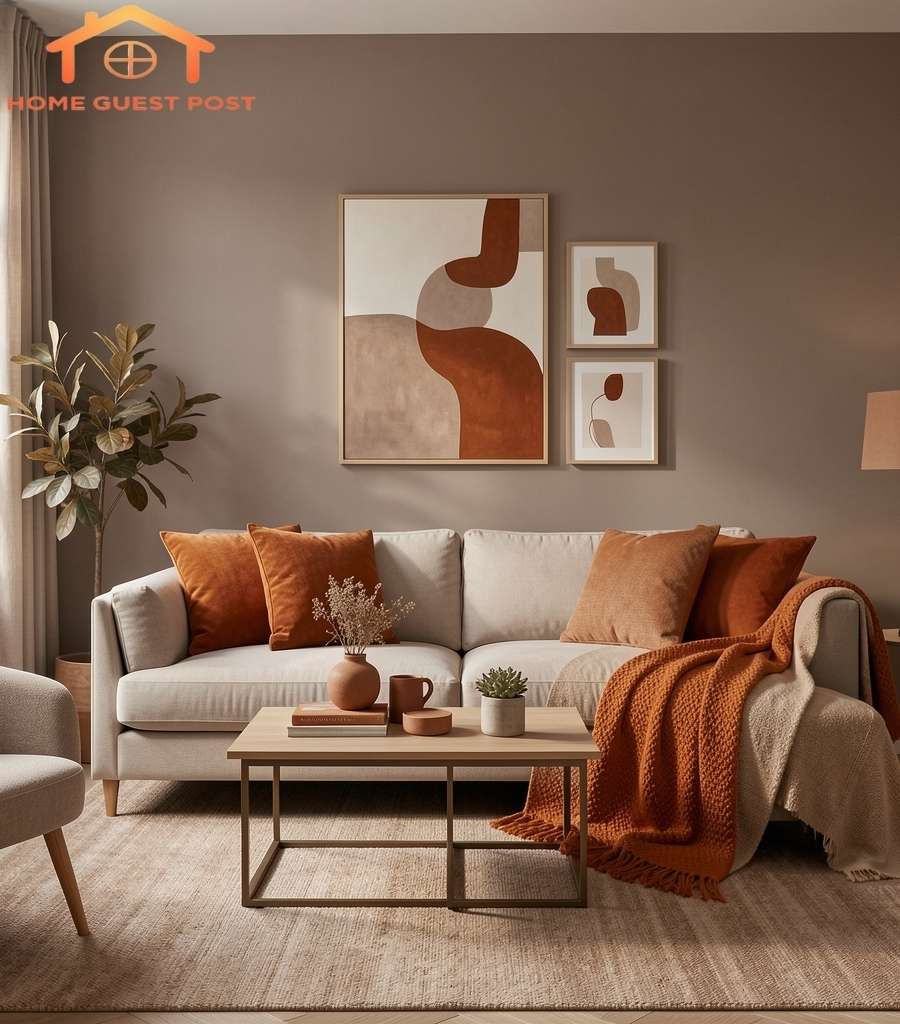
Taupe is having a well-deserved moment in interior design. It’s that perfect in-between, neither gray nor beige, but somehow the best of both. And paired with burnt orange, it creates a harmony that feels considered and serene.
The warmth in taupe picks up on the warm tones in burnt orange, creating a palette that feels cohesive rather than contrasted. It’s a more subtle approach to decorating with this color, ideal if you love burnt orange but want a softer overall effect.
Taupe walls with burnt orange furniture is a combination that works especially well in living rooms that receive warm afternoon light. The colors deepen beautifully as the day moves toward evening, creating that golden-hour effect indoors.
Accessorize with natural wood, soft lighting, and earthy ceramics to complete the look. Plants with warm-toned pots add life without disrupting the color harmony.
Light Blue with Burnt Orange Pops
Complementary colors always create energy. And light blue with burnt orange pops is one of the most visually stimulating and refreshing combinations you can bring into a living room.
These two colors sit opposite each other on the color wheel. That means they naturally enhance each other. The cool lightness of pale blue makes the warmth of burnt orange more vivid. The burnt orange makes the blue feel fresher and more alive.
Use light blue as the dominant room color and let burnt orange punctuate. A pale blue accent wall, sky-blue linen curtains, and then burnt orange cushions, a throw, and a couple of framed prints. The ratio should lean heavily toward blue with orange as the pop.
This works especially well in rooms with high ceilings or good natural light. The cool-warm dynamic keeps the space feeling bright and energized without ever becoming overwhelming.
Sandy Beige and Burnt Orange Serenity
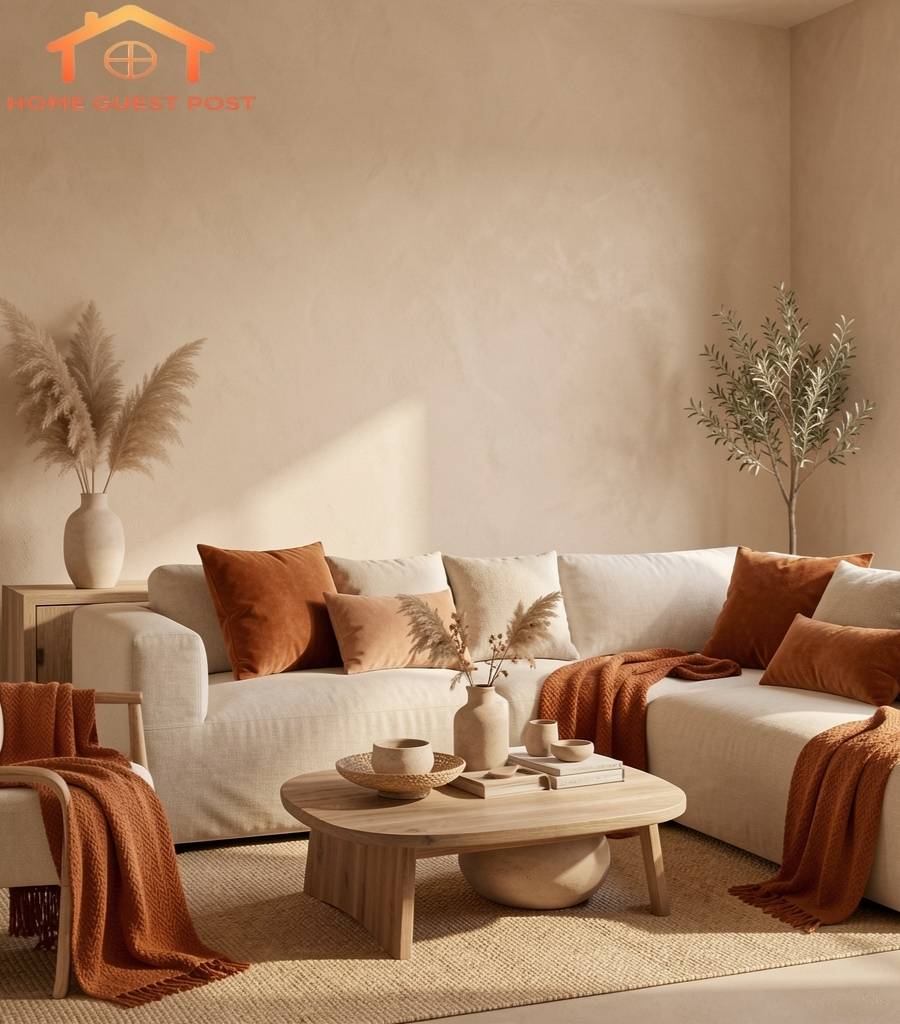
Sandy beige has a coastal, natural quality. It’s the color of warm shorelines, dry dunes, and sun-bleached wood. Pair it with burnt orange and you get a living room that feels like a permanent sunset.
This is one of the most calming color combinations available to you. Neither tone is jarring or intense. Together they create a palette that soothes without boring and warms without overheating.
Natural textures are your best friend here. Woven jute rugs, linen curtains, sand-colored walls, and driftwood-style furniture pieces. Then layer in burnt orange through cushions, throws, and small decorative objects. The room builds organically, layer by layer.
If you live somewhere with a warm climate or just love that sun-soaked, relaxed aesthetic, this pairing will feel completely at home in your space.
Slate Gray and Burnt Orange Balance
Slate gray has a cool, composed quality. It’s more complex than standard gray, with hints of blue and green that give it real depth. Against that coolness, burnt orange creates a striking, well-balanced contrast.
This combination is particularly effective in contemporary and transitional living rooms. The slate provides a modern, almost architectural backdrop. The burnt orange breaks that seriousness and brings in warmth and personality.
Balance is everything in this pairing. Too much slate and the room feels cold. Too much orange and the sophistication gets lost. Aim for slate as your dominant tone in walls and large furniture, with orange appearing in rugs, cushions, and artwork.
Metallic accents in brass or copper tie both colors together beautifully. They share warm undertones with the orange while adding a refined finish that elevates the whole palette.
Muted Green with Burnt Orange Accents
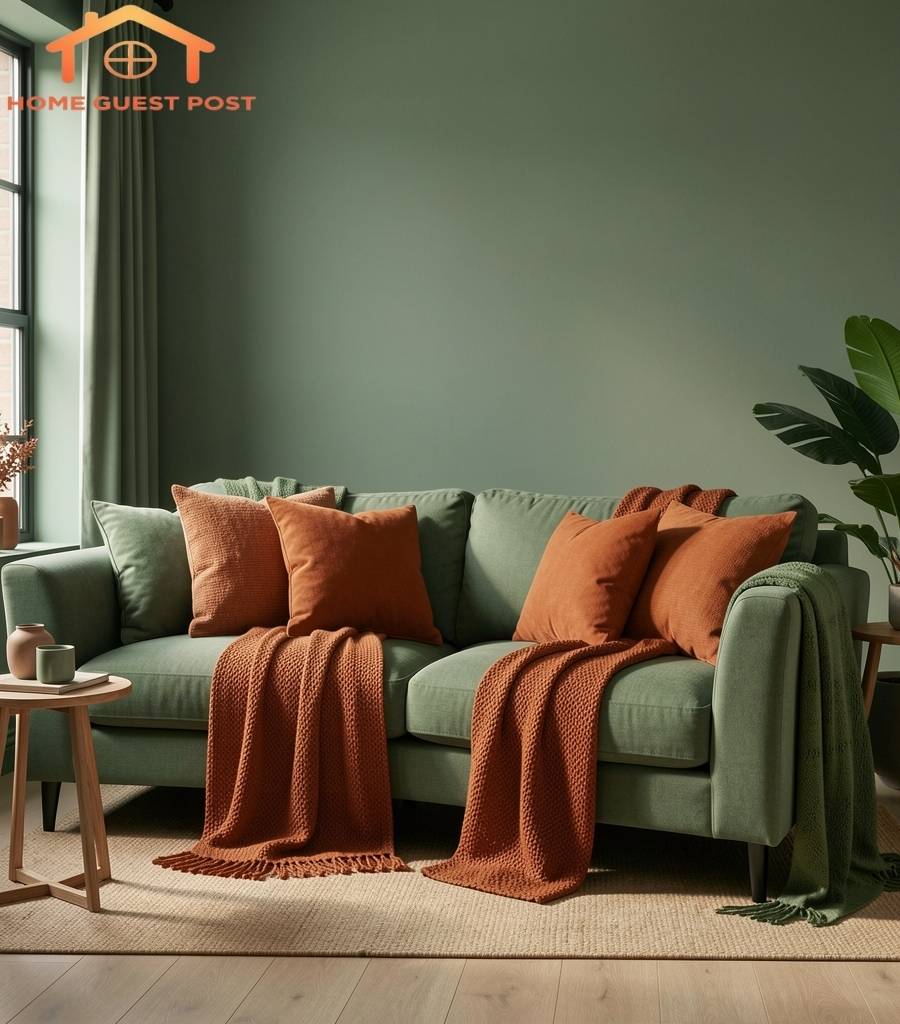
Nature never gets color combinations wrong. Think of an autumn forest floor. Deep burnt orange leaves scattered over muted green moss and grass. That’s essentially what this interior palette is trying to recreate indoors.
Muted green, whether sage, olive, or eucalyptus, has a natural, organic feel. It’s not loud. It doesn’t compete. Instead it creates a calm, botanical backdrop for burnt orange to warm up. The result is a living room that feels both earthy and fresh.
This combination works beautifully in boho, rustic, and Scandinavian-inspired spaces. Pair it with raw wood furniture, ceramic accessories, and plenty of indoor plants. Let the greenery outside connect with the tones inside.
Textiles matter a lot here. A burnt orange and muted green patterned rug or a gallery wall mixing botanical prints with warm-toned art can bring this palette together with real depth and character.
Charcoal Black with Burnt Orange Highlights
This is for those who aren’t afraid of drama. Charcoal black walls with burnt orange highlights create one of the most visually powerful living room combinations available.
The darkness of charcoal black makes burnt orange glow almost like embers. It amplifies the warmth of the color in a way that lighter backgrounds simply can’t. A burnt orange sofa against near-black walls is genuinely breathtaking.
Keep the rest of the room simple when going this dark. Let the contrast do all the heavy lifting. Natural wood accents, simple metallic fixtures, and clean-lined furniture prevent the space from feeling cluttered or oppressive.
This palette works especially well in rooms with low lighting or evening-focused living rooms. It’s intimate, bold, and deeply atmospheric. Think of it like the interior equivalent of a candlelit dinner.
Pale Gray with Burnt Orange Subtlety
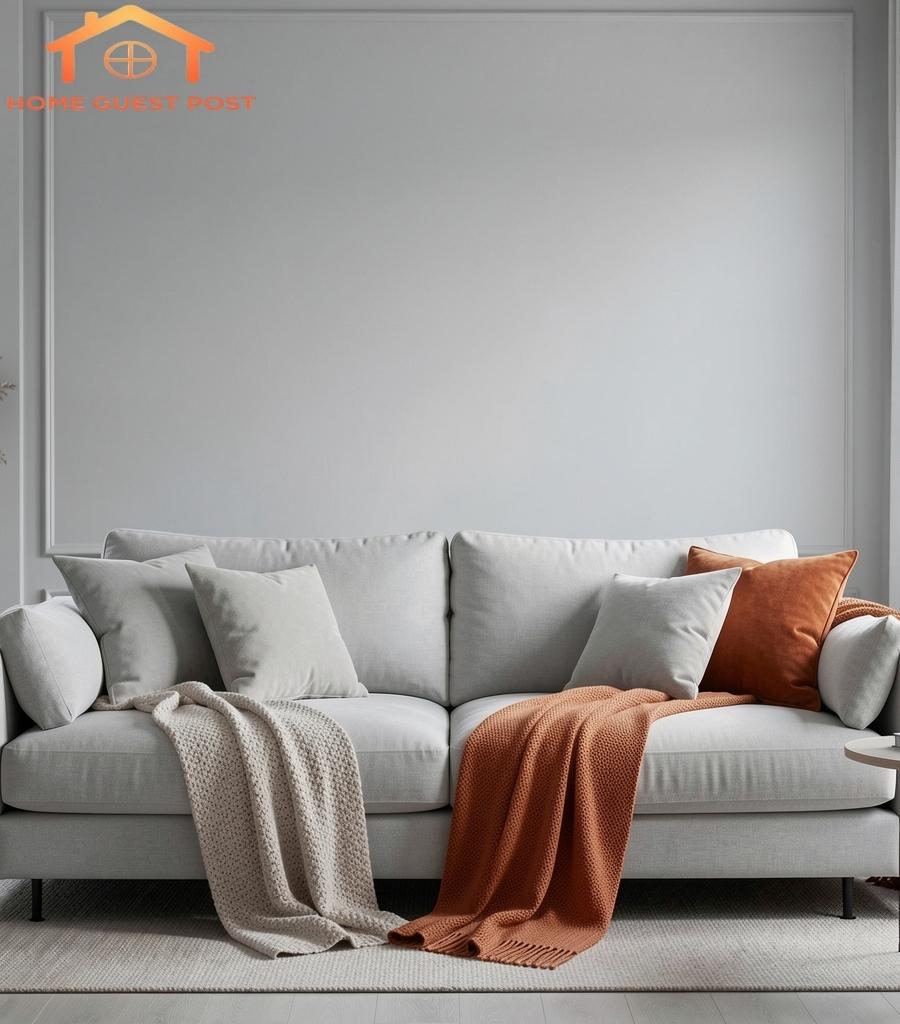
If you love the idea of burnt orange but worry about going too bold, this combination is your answer. Pale gray creates one of the most forgiving, versatile backdrops in interior design. Against it, even small touches of burnt orange register beautifully.
Pale gray walls with a hint of warmth, combined with subtle burnt orange accessories, create a living room that feels fresh and modern without any visual noise. It’s understated elegance done really well.
Use burnt orange sparingly here. A single cushion. One piece of wall art. A small vase or bowl on the coffee table. The restraint is what makes it work. You’re suggesting warmth rather than announcing it, and that subtlety reads as incredibly sophisticated.
This is also a great starting point if you’re new to decorating with this color. Start small, see how it feels, and build from there.
Burnt Orange and Plum Regal Retreat
Few color pairings feel as genuinely luxurious as burnt orange and plum. Both colors carry depth and richness. Together they create a living room that feels curated, opulent, and completely one-of-a-kind.
Plum adds a regal dimension to burnt orange’s earthiness. Where orange brings warmth, plum brings mystery. The combination is dramatic without relying on black or dark walls. It stands on its own.
Use these two colors in equal but balanced measures. A plum velvet sofa with burnt orange cushions and a warm-toned rug. Or burnt orange walls with deep plum accent pieces and rich jewel-toned textiles throughout.
Gold metallic finishes tie the two colors together seamlessly. Think gold-framed mirrors, brass light fixtures, and gilded accessories. This combination is unapologetically bold, and it’s stunning for it.
Ivory and Burnt Orange Softness
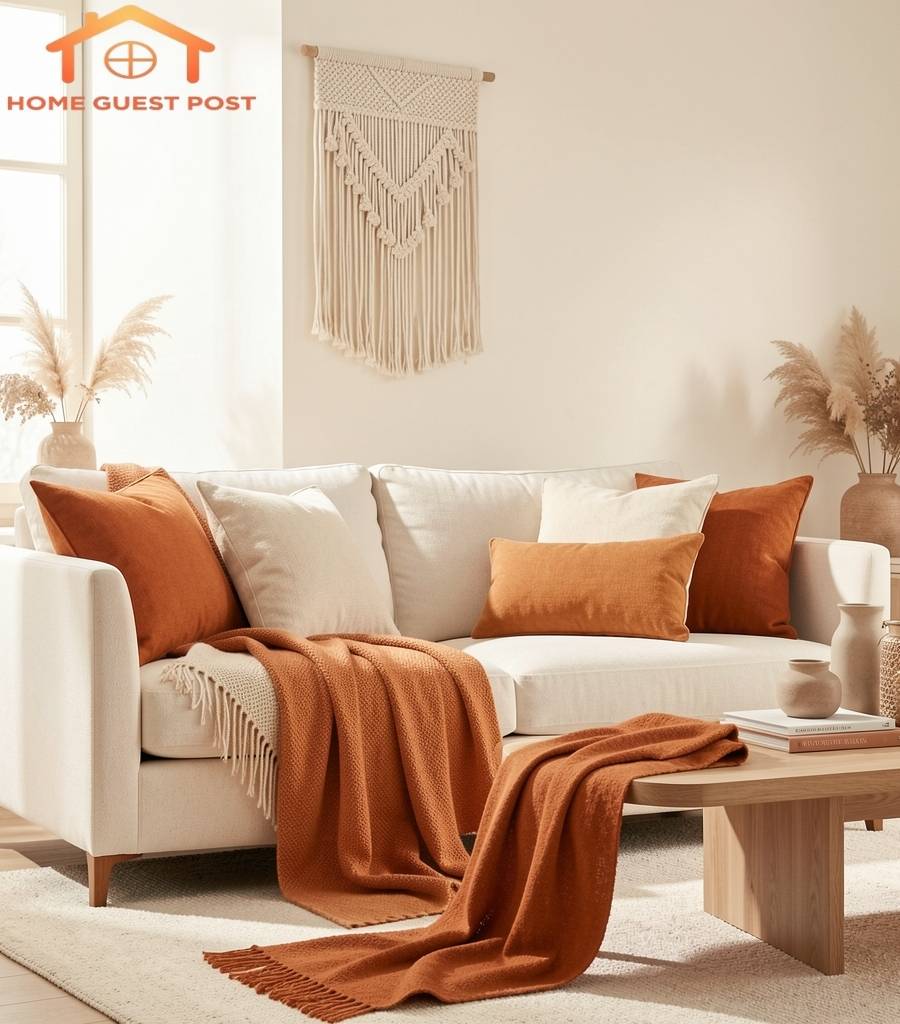
Ivory is gentler than white and creamier than cream. It has an antique warmth that pairs incredibly naturally with burnt orange. Together, they create a palette that feels soft, romantic, and deeply comfortable.
This combination works especially well in traditional or transitional living rooms. Ivory walls or ivory upholstery provide a soft canvas, and burnt orange weaves through in textiles, ceramics, and artwork.
Think of layered textures here: an ivory linen sofa, a burnt orange silk throw, a hand-woven cushion with both tones, a terracotta lamp on a worn-ivory side table. Each layer adds warmth and intimacy to the room.
This is a palette that improves with age. The more lived-in it becomes, the better it looks. It’s one of those rooms that’s beautiful to walk into at any hour of the day.
Soft Blue with Burnt Orange Touches
Soft blue is soothing. It’s the color of clear skies and still water. And when you add burnt orange touches, you introduce a sunrise into that calm blue sky. The contrast is stunning and deeply satisfying to the eye.
This pairing has a lot of creative range. You can lean coastal with weathered wood and linen. You can go more contemporary with clean lines and graphic patterns. Or you can take it in a boho direction with layered textiles and eclectic accessories. The soft blue and burnt orange combination adapts to each approach effortlessly.
Keep the burnt orange touches deliberate and well-placed. A burnt orange cushion cluster on a soft blue sofa. Orange-toned artwork on a blue-painted wall. A rust-colored lamp beside a pale blue armchair. Each moment of orange should feel intentional, not scattered.
Rustic Burnt Orange and Olive Green Oasis
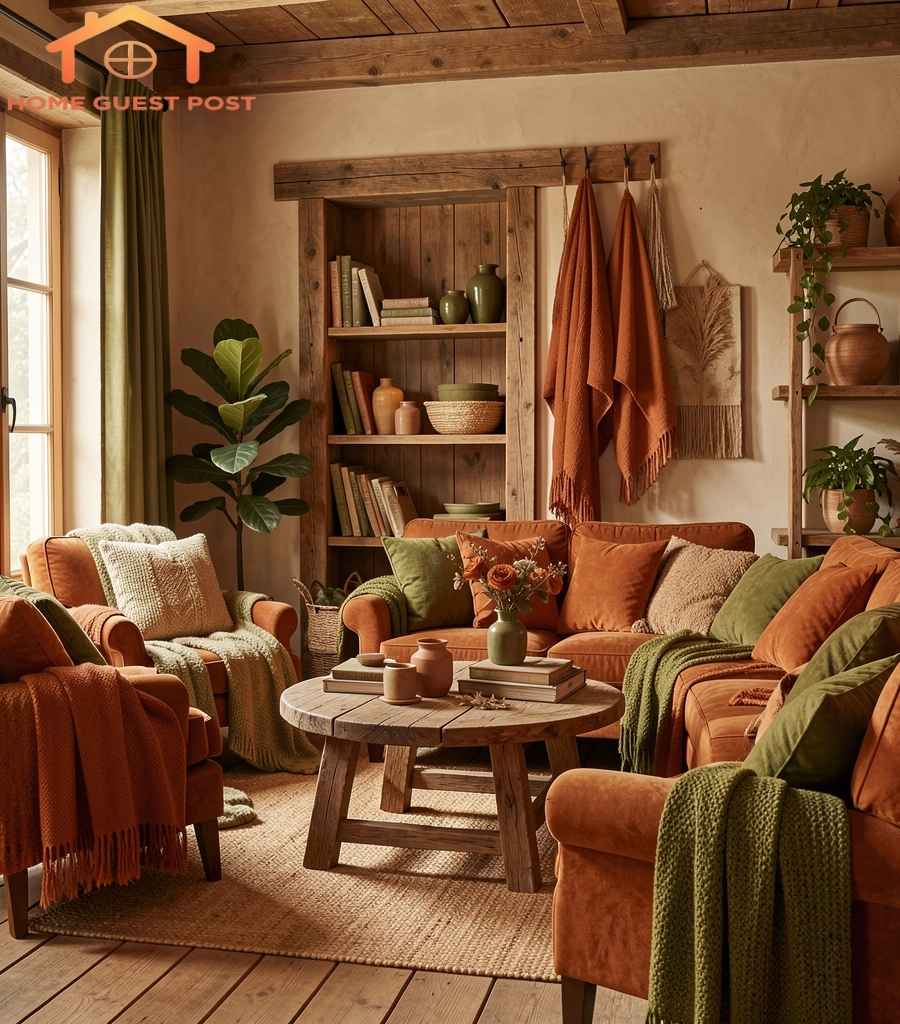
This is countryside living distilled into a color palette. Rustic burnt orange and olive green together create a living room that feels earthy, grounded, and deeply connected to the natural world.
Olive green has a wonderful complexity. It’s neither bright nor dull. It sits in that perfect middle ground, organic and sophisticated at once. Against rustic burnt orange, it creates a palette that feels genuinely timeless.
Go for natural, imperfect materials to complete the look. Rough-hewn wood furniture, handmade ceramics, linen and wool textiles, wicker and rattan accessories. Everything should feel like it was found rather than bought.
A stone fireplace in a room with this palette is absolutely perfect. The combination of earthy colors, natural textures, and a real fire creates the kind of atmosphere that makes guests never want to leave.
Mid-Century Burnt Orange and Teal Delight
Mid-century modern and burnt orange are practically inseparable. The style was practically built on this color. Pair it with teal and you get something that feels both nostalgic and surprisingly fresh.
Teal brings a cool, sophisticated depth that complements burnt orange beautifully. Together they evoke the best of 1960s interior design while feeling completely relevant today. It’s retro without being costume-y.
Lean into the era’s design vocabulary. Low-profile furniture, tapered legs, geometric patterns, and bold graphic artwork. A teal sofa with burnt orange cushions and a vintage-style rug is a complete statement in itself.
Plants are essential here. Mid-century modern interiors thrive with greenery, and the natural tones of houseplants add another layer of visual richness to this already compelling palette.
Burnt Orange and Navy Blue Sophistication
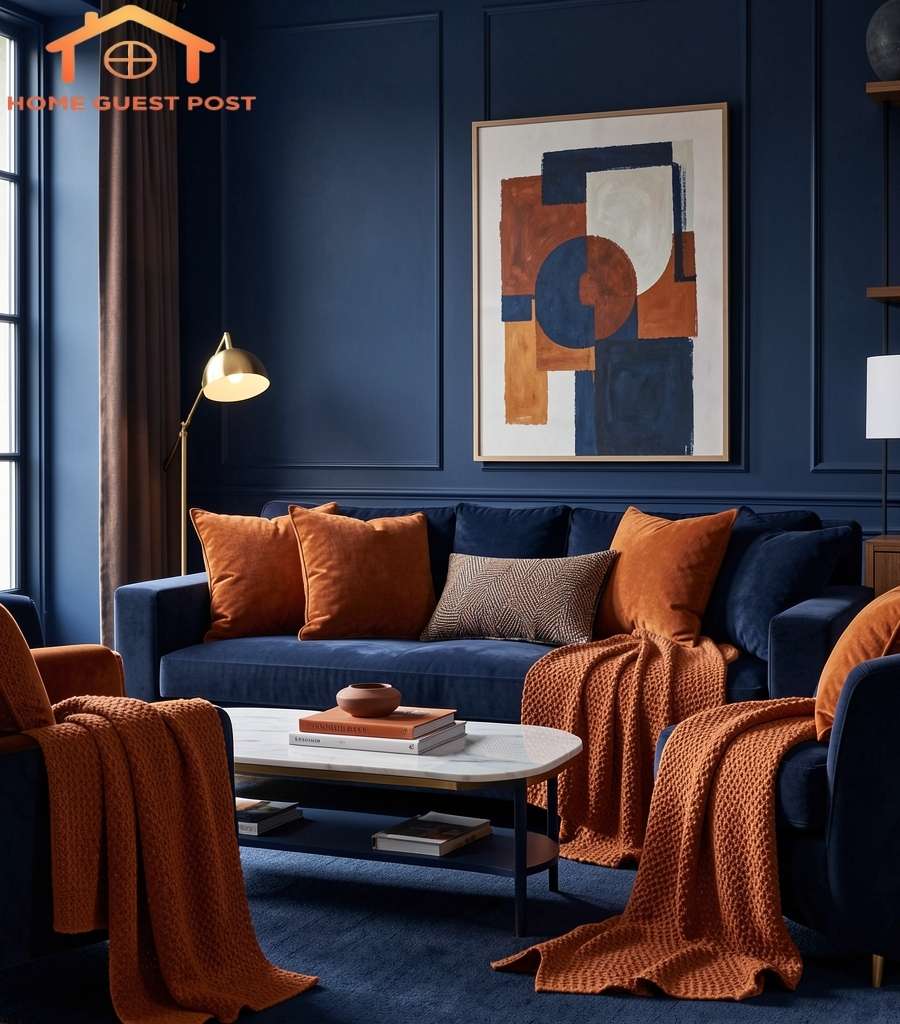
The burnt orange and navy color scheme is one of the most enduringly popular combinations in interior design. Navy brings depth, formality, and polish. Burnt orange brings warmth, energy, and personality. Together they balance each other with remarkable precision.
This combination works across styles. Traditional, contemporary, transitional, nautical-inspired. The pairing is flexible enough to adapt to whatever direction you want to take it.
Navy walls with burnt orange furniture is a particularly striking arrangement. Or flip it: burnt orange as the dominant tone with navy as a deep, grounding accent. Both approaches produce a beautifully sophisticated result.
Brass and gold accents work wonderfully here. They warm up the navy and complement the burnt orange simultaneously, creating a cohesive, layered palette that feels considered from every angle.
Bohemian Burnt Orange and Mustard Yellow Vibe
If there’s one color that loves burnt orange as much as the room itself, it’s mustard yellow. These two warm tones share a natural affinity. Layer them together in a bohemian setting and you create a living room that buzzes with life, texture, and personality.
The key to pulling this off is pattern and texture. Moroccan-style rugs, embroidered cushions, layered throws, macrame wall hangings, and rattan furniture. The boho aesthetic thrives on eclecticism, and this palette gives you the freedom to mix and layer freely.
Don’t be afraid of color here. Bohemian design celebrates abundance and individuality. Plants, candles, books, global-inspired accessories, and natural materials all belong in this space.
Keep the bones of the room fairly neutral, whether that’s whitewashed walls or warm wood floors, so the textile layers can take center stage without competing with the architectural shell.
Traditional Burnt Orange and Gold Elegance
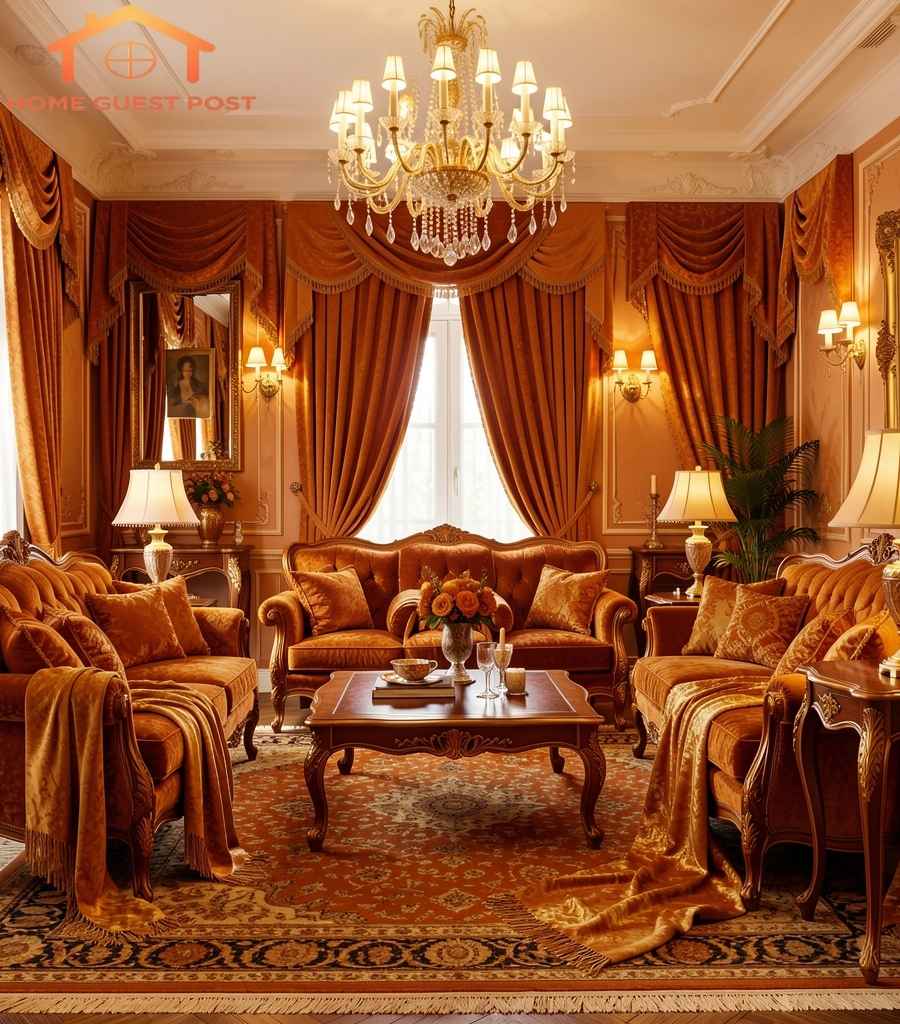
Traditional interiors are defined by warmth, symmetry, and a sense of timeless refinement. Burnt orange fits into this world remarkably well. Add gold and you elevate the entire palette into something genuinely grand.
Gold doesn’t have to mean excess. Warm brass finishes on light fixtures, gold-leafed picture frames, gilded accessories, and rich metallic textiles all deliver that luxurious quality without tipping into ostentation.
A burnt orange living room with gold accents, traditional furniture silhouettes, and rich patterned rugs creates a space that feels both established and welcoming. It’s the kind of room that tells a story.
Deep wood tones, classic paneling, and layered lighting through multiple sources complete the picture. This is traditional design at its most confident and considered.
Burnt Orange and Sage Green Garden Room
Sage green has a coolness that grounds and calms. Burnt orange has a warmth that energizes and invites. Together they create a garden-room aesthetic that feels perpetually fresh, like living inside a warm greenhouse.
This palette is deeply connected to the wellness and biophilic design movements. It acknowledges that people feel better surrounded by nature-inspired colors and organic forms. Your living room can participate in that without a single plant if needed, though plants do make it perfect.
Wicker furniture, terracotta pots, linen curtains, and natural wood all support this palette beautifully. The burnt orange and sage green combination also works in nearly every style from cottagecore to contemporary botanical.
Large windows that frame garden views make this combination sing at full volume. Natural light activates both tones and creates a seamless connection between inside and out.
Modern Burnt Orange and Black Drama
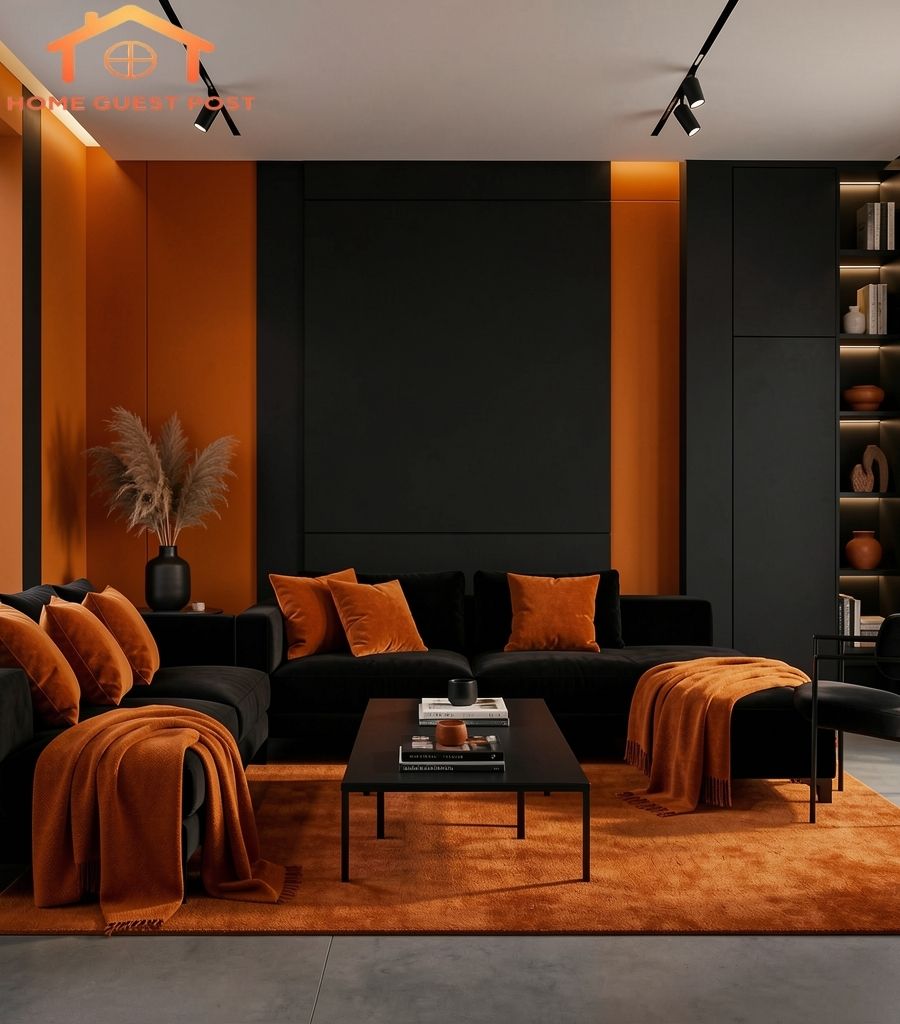
Black in interior design is all about confidence. It adds definition, sophistication, and a kind of visual authority that no other color can replicate. And against a modern burnt orange, it creates drama that’s genuinely hard to look away from.
The contrast is extreme and intentional. Black grounds the burnt orange’s warmth and prevents it from feeling overly casual. The orange, in turn, keeps the black from feeling cold or oppressive.
In a modern context, keep forms geometric and clean. A black-framed sofa with burnt orange cushions. Black shelving displaying warm-toned ceramics. A black accent wall behind an orange statement chair. Each element earns its place.
Polished concrete floors or dark hardwood work beautifully with this palette. The textures add another layer of visual interest without complicating the color story.
Burnt Orange and Turquoise Eclectic Mix
Turquoise and burnt orange are a bold pairing. They’re both confident colors that don’t shy away from attention. But when balanced well, they create a living room that’s vibrant, eclectic, and full of character.
This combination draws from multiple global design traditions. Moroccan, Southwestern, Mediterranean, and bohemian aesthetics all use these two colors in interesting ways. The result is a space that feels well-traveled and deeply personal.
Use patterned textiles to blend the two colors naturally. A rug that combines turquoise and burnt orange tones, or embroidered cushions with both colors woven through, helps the palette feel cohesive rather than chaotic.
Keep walls neutral if the colors feel intense. A warm white or sandy beige background allows the turquoise and burnt orange to be vibrant without becoming visually exhausting.
Burnt Orange and Beige Coastal Comfort
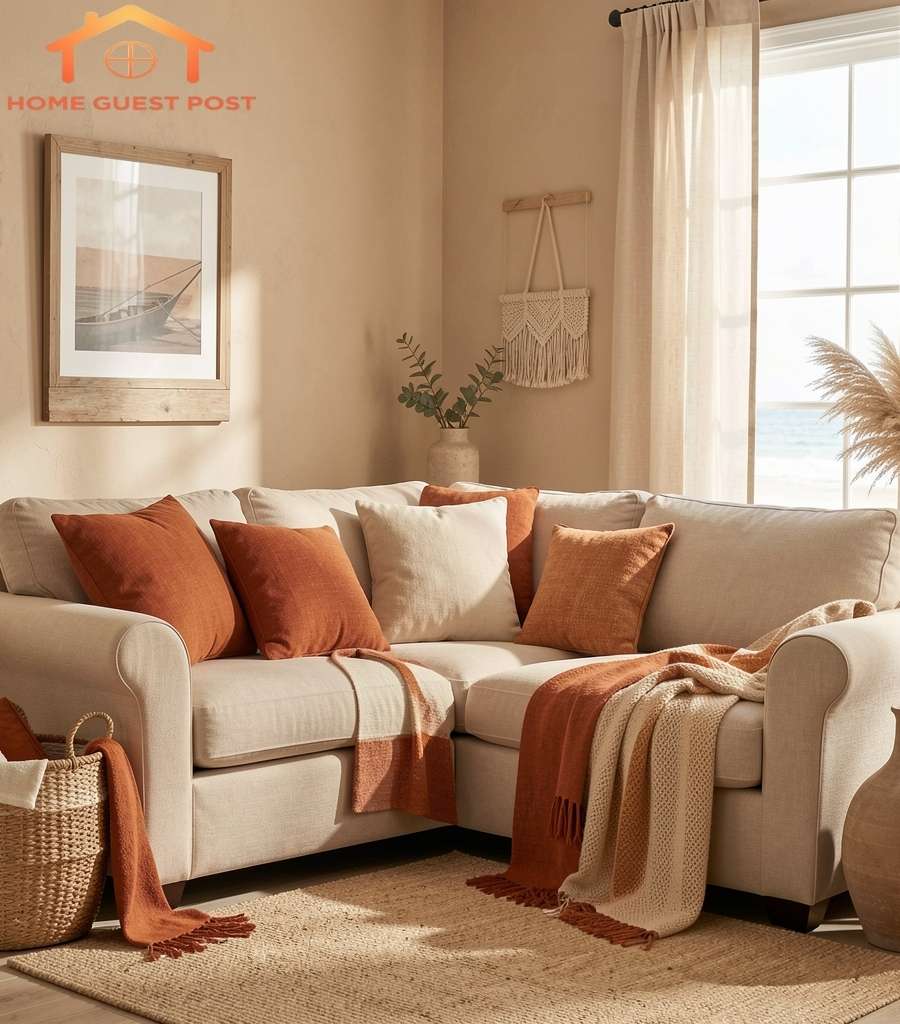
Coastal design often gets confined to blue and white. But there’s a warmer, more relaxed version of coastal style that draws on sandy beiges, warm neutrals, and sun-kissed tones. Burnt orange fits beautifully into this world.
Burnt orange and beige coastal comfort is about evoking that late-afternoon beach feeling. Warm sand, golden light, the glow of a sunset over still water. It’s relaxed and unpretentious but deeply beautiful.
Use natural materials generously. Rattan furniture, jute rugs, linen slipcovers, driftwood accessories, and sea-glass inspired ceramics. The tactile quality of these materials adds the dimension that makes coastal interiors feel genuine rather than themed.
Burnt orange cushions on a beige sofa, with warm wooden side tables and low, warm lighting, create a living room that feels like a permanent holiday. It’s welcoming, easy, and endlessly livable.
How to Style a Burnt Orange Living Room: Key Tips That Actually Work
Before you dive in and start buying, there are a few practical principles worth keeping in mind. These aren’t rules so much as guidelines that interior designers use to make this color work consistently.Start with the 60-30-10 rule. Sixty percent of your room in a dominant neutral, thirty percent in a secondary color, and ten percent in your accent. Burnt orange works brilliantly as either the 30 or the 10, depending on how bold you want to go.
Think about finish as much as color. Matte burnt orange has a very different feel to glossy or velvet-finish orange. Matte is earthy and relaxed. Velvet is luxurious and rich. Gloss is modern and graphic. The same color creates completely different moods depending on the surface it sits on.
Layer your lighting. Burnt orange interiors perform best under warm, amber-toned lighting. Cooler daylight bulbs can strip the warmth from this palette, so invest in quality warm-tone bulbs for lamps and overhead fixtures.
Don’t forget the ceiling and floor. Warm wood floors and even a subtly warm ceiling color can support your burnt orange palette from the ground up, creating a completely enveloping sense of warmth throughout the entire space.
FAQ’s
What colors go best with burnt orange in a living room?
Burnt orange pairs well with neutrals like beige, cream, and taupe, as well as deeper tones like navy, charcoal, and plum. Cool colors like teal, sage green, and soft blue also create striking contrasts.
Can burnt orange work in a small living room?
Yes, it can. Use burnt orange in accents rather than large furniture pieces to keep the room feeling open. A few cushions, a rug, or a single accent wall can deliver the warmth without making the space feel smaller.
Is burnt orange a trendy or timeless color for interiors?
Burnt orange has appeared consistently in interior design for decades, especially in mid-century modern, rustic, and bohemian styles. It’s more timeless than trendy, with a staying power that most bold colors don’t have.
What type of rug works best in a burnt orange living room?
Natural fiber rugs in jute or wool, or patterned rugs in warm tones, work beautifully. Look for rugs with rust, amber, or terracotta tones to complement the palette, or choose a contrasting color like navy or teal for a bolder effect.
How do I add burnt orange to my living room without repainting?
Textiles are the easiest entry point. Cushions, throws, and curtains in burnt orange can transform a room instantly. A statement rug or a few well-chosen accessories like ceramics and artwork can also do the heavy lifting without touching the walls.

Ethan Cole is a home improvement content specialist and industry researcher with years of experience analyzing residential trends, renovation strategies, and property enhancement insights. He collaborates with homeowners, designers, and professionals to deliver practical, trustworthy guidance. His work focuses on helping readers make confident, informed decisions to improve their living spaces.