

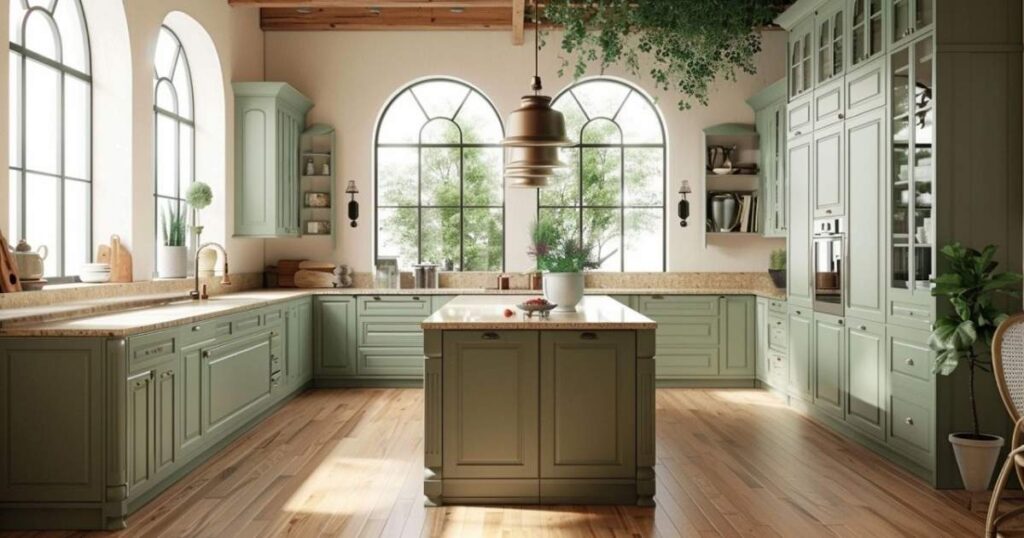
There’s a moment when you walk into a kitchen and just feel it. The warmth hits you before you even register the colors. That’s exactly what terracotta and sage green kitchens do to a space. They don’t just look good, they feel good.
If you’ve been scrolling through kitchen inspiration boards lately, you’ve probably noticed this pairing everywhere. And honestly? It deserves the attention. Terracotta brings that sun-baked, earthy richness. Sage green adds a cool, grounded calm. Together, they create something that feels both timeless and very much right now.
But here’s what most articles won’t tell you. Getting this combination right isn’t just about slapping two colors on cabinets and calling it a day. It’s about understanding proportion, texture, lighting, and how these tones behave in a real kitchen, with grease, steam, morning light, and evening shadows doing their thing.
So let’s get into it. Twenty-five ideas, genuinely useful, no filler.
1. Modern Terracotta Statement
Sometimes a kitchen needs one bold move. One decision that anchors everything else. A terracotta kitchen island does exactly that.
Picture matte lacquered cabinetry in a deep, chalky terracotta, not orange, not red, but that specific burnt clay tone that feels handmade. Pair it with white or light stone worktops, and the island becomes the room’s entire personality. You’re not decorating around it. You’re decorating because of it.
This approach works especially well in open-plan spaces where the kitchen bleeds into a dining or living area. The island acts as a visual anchor. It tells the eye where the kitchen begins. And because terracotta reads as warm and inviting rather than loud and aggressive, guests tend to gravitate toward it without quite knowing why.
For modern kitchens leaning into this look, burnished copper finish hardware is the natural companion. It pulls out the reddish wood tones in any timber flooring nearby, and the metallic warmth echoes the terracotta without competing with it.
2. Terracotta Warmth with Sage Accents
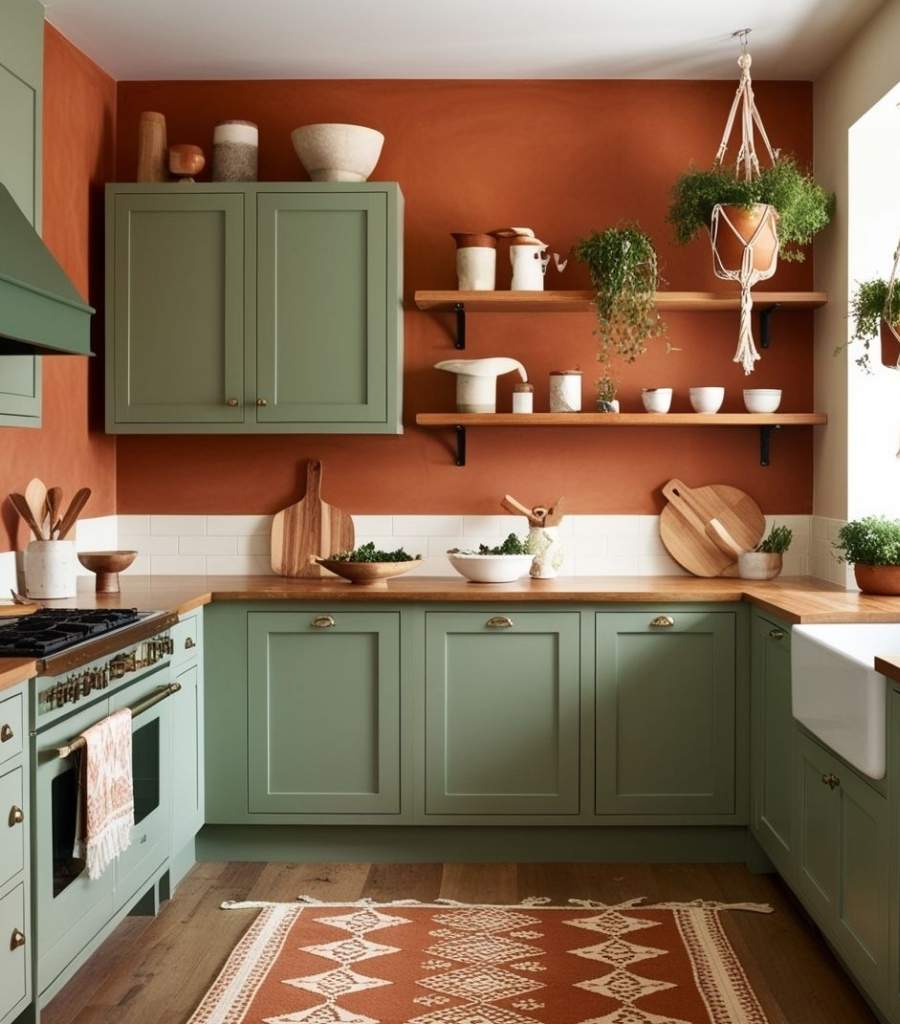
This is the entry point for most people. You love terracotta, but you’re not ready to commit fully. Sage accents give you the best of both worlds.
Start with a terracotta base, cabinetry, walls, or a dominant tile, and introduce sage through softer elements. Open shelving painted in muted sage, a sage green blind above the sink, or even a row of sage-painted lower cabinets beneath terracotta uppers. The contrast is subtle but powerful.
What makes this pairing so satisfying is the temperature balance. Terracotta is warm. Sage leans cooler, even slightly blue-green depending on the light. When they sit together, neither dominates. Instead, they create a warm neutral kitchen palette that feels layered and considered, not accidental.
Antique brass accents tie the whole scheme together beautifully. It’s a trio that interior designers keep returning to because it genuinely works in both large and compact kitchens.
Read More: 40 Stunning White and Beige Living Room Ideas for a Cozy, Elegant Home
3. Minimalist Sage Green with Terracotta Touches
Not everyone wants drama. Some people want a kitchen that whispers rather than shouts. This is that kitchen.
Sage green cabinetry, flat-fronted, handle-less, clean, sets a serene, modern tone. The terracotta arrives quietly. A ceramic vase on the shelf. A single terracotta tile used as a splashback insert. A linen blind in a terracotta-adjacent warm clay tone.
The restraint is the point. When terracotta is used as an accent rather than a foundation, it creates moments of warmth that feel personal rather than designed. Like the kitchen evolved organically, collecting pieces that meant something.
This approach aligns well with bespoke kitchen interiors that prioritize craftsmanship over trend-chasing. Every element earns its place. Nothing is decorative for the sake of it.
4. Elegant Sage Retreat
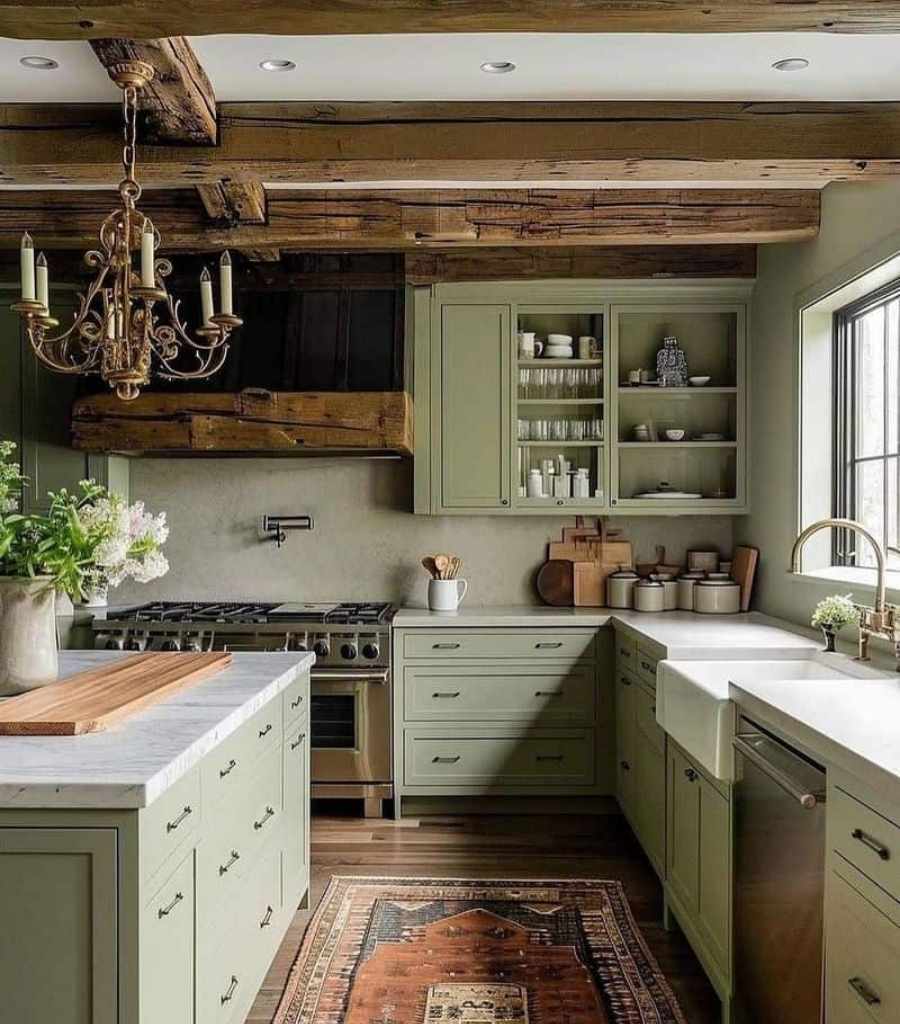
Sage green has a quality that few other colors possess. It changes throughout the day. In morning light, it reads almost grey. At midday, the green deepens. In the evening with warm artificial lighting, it takes on a golden softness.
An elegant sage retreat kitchen leans into this quality deliberately. Full-height cabinetry in a sophisticated sage tone, paired with marble or quartz worktops in warm white or pale grey. The effect is quiet luxury. Nothing shouts. Everything belongs.
Terracotta enters through the flooring, perhaps terracotta floor tiles in a large format, or a warmer terracotta-toned stone that bridges the sage cabinetry and the natural materials elsewhere. This keeps the warm earthy color palette grounded and prevents the room from feeling too cool or clinical.
Velvet dining chairs in a deep terracotta or burnt rust complete the eat-in kitchen concept beautifully. They add tactile richness and pull the color palette from the floor upward through the space.
5. Rustic Terracotta & Sage Haven
Some kitchens don’t want to be modern. They want to feel like they’ve been there for a hundred years. Rustic terracotta and sage kitchens understand that impulse completely.
Think rough-plastered walls in a warm terracotta tone, open wooden shelves with a waxed finish, and sage green cabinetry with a slightly distressed edge. Not fake-distressed. Genuinely worn, or at least made to feel that way through careful material choice and matte finishes.
Terracotta floor tiles with an uneven, handmade quality add authenticity. The grout lines matter here, go wide and opt for a warm sand tone rather than bright white. Bright white grout reads as modern and too precise. It breaks the rustic kitchen charm you’re building.
Copper kitchen accessories, a hanging pot rack in aged copper, a copper splashback section behind the range, add warmth without modernity. This is rustic kitchen charm done with intention.
6. Subtle Terracotta Highlights
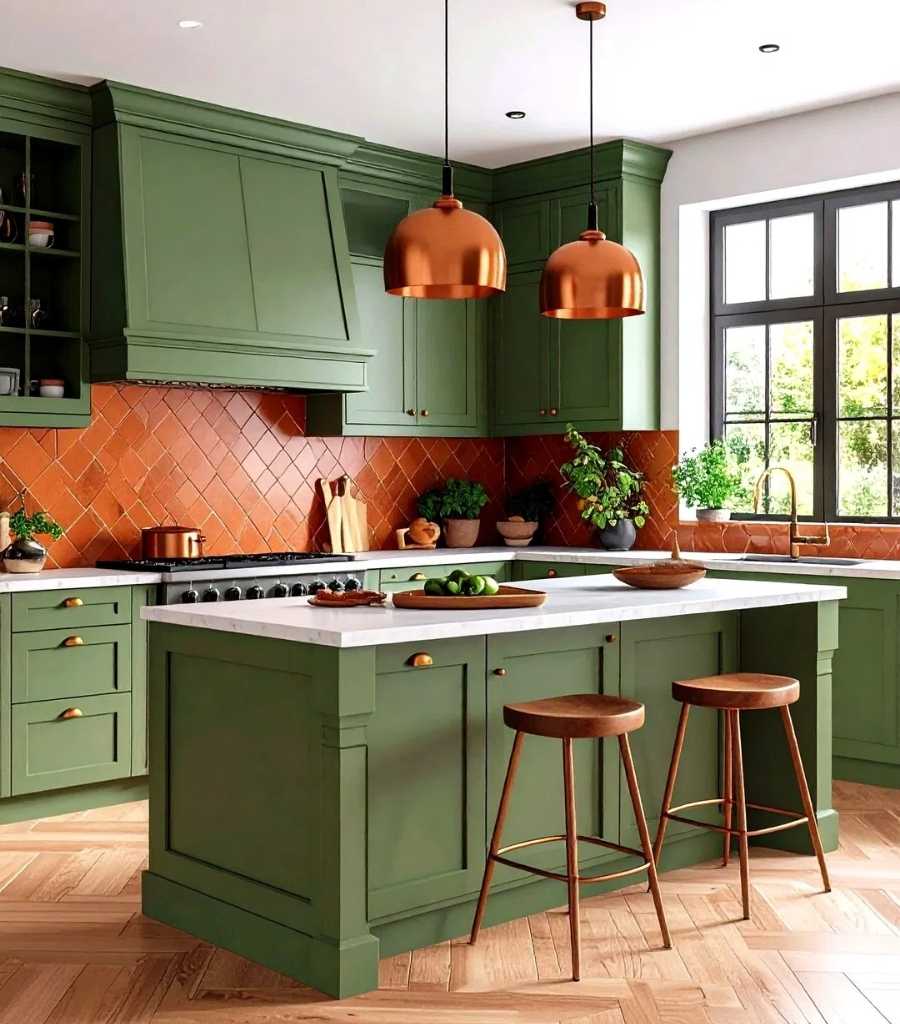
You don’t need to paint a single cabinet to use terracotta effectively in a kitchen. Sometimes the best terracotta moment is the one you almost miss.
A collection of terracotta pots on the windowsill. A terracotta-toned ceramic pendant light above the island. A woven terracotta placemat on a breakfast bar. These micro-moments of color add up. They tie the space together in a way that feels effortless rather than engineered.
This approach suits kitchens that are mostly neutral, white, cream, or light grey cabinetry, where the homeowner wants warmth without renovation. It’s also the smartest starting point if you’re unsure about the full terracotta commitment. Try the accessories first. Let the color earn its keep.
7. Terracotta & Sage Two-Tone Magic
Two-tone kitchens have never really gone away, and this pairing is one of the strongest arguments for the format. Upper cabinets in sage green, lower cabinets in terracotta. Or the reverse.
The reason this works so well isn’t purely aesthetic. It’s practical too. Lower cabinets in a darker, warmer terracotta tone are less likely to show scuffs and everyday wear. Upper cabinets in sage keep the upper half of the kitchen lighter and more open-feeling.
Reflective metal surfaces, a copper splashback, metallic kitchen finishes on handles and fixtures, sit comfortably between both colors, acting as a visual bridge rather than an interruption. This is statement kitchen cabinet design done with real intelligence.
8. Sage & Terracotta Industrial Elegance
Industrial kitchens can sometimes feel cold. Raw concrete, exposed steel, and utilitarian layouts don’t always add up to warmth. But sage and terracotta fix that.
Introduce sage green through industrial-style cabinetry with a matte factory finish. Add terracotta through raw, unglazed tile sections or a terracotta splashback behind the cooker. The contrast between the industrial framework and the earthy, handmade quality of terracotta creates genuine visual tension, the good kind.
Natural metal sheets used as a wall section or worktop edge add authenticity. This isn’t about softening the industrial aesthetic. It’s about giving it soul. The terracotta kitchen trend at its most unexpected.
9. Terracotta Tile Dream
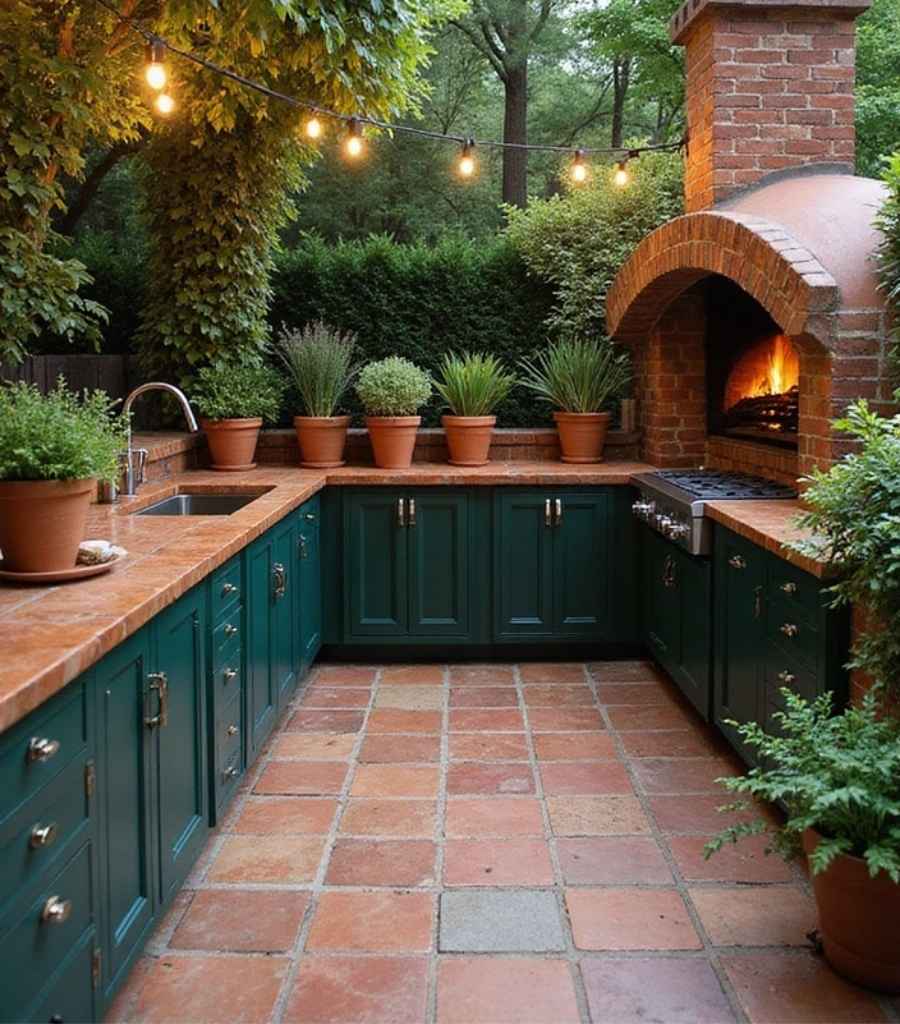
If there’s one material that defines the terracotta kitchen trend right now, it’s the tile. Specifically, the floor tile.
Terracotta floor tiles, whether traditional square, rectangular brick format, or large format modern slabs, create an immediate sense of warmth underfoot and throughout the room. They reference centuries of Mediterranean and Spanish design heritage without feeling like a history lesson.
The key is in the finish. Unglazed terracotta has an organic, matte quality that pairs perfectly with sage green cabinetry above. Glazed or sealed terracotta reads more contemporary and suits sleeker, modern kitchen ideas. Both are valid. The choice depends entirely on the direction you’re taking the rest of the space.
10. Lush Sage & Burnt Terracotta
Burnt terracotta is a specific shade worth knowing. It’s deeper and more complex than standard terracotta, darker, with a smokier quality that edges toward rust or deep ochre.
Against lush, slightly saturated sage green, burnt terracotta creates a rich, jewel-like palette that feels decidedly luxurious. This isn’t a casual kitchen color scheme. It’s a commitment. And it rewards that commitment with a space that genuinely feels unlike anything else.
Dark green matt lacquer cabinetry on one wall against burnt terracotta on another creates a dramatic, gallery-like quality. Add antique brass accents and handcrafted metal kitchen finishes to amplify the high-end kitchen color direction. This is earthy tone luxury kitchens at their most expressive.
11. Boho Chic Terracotta & Sage
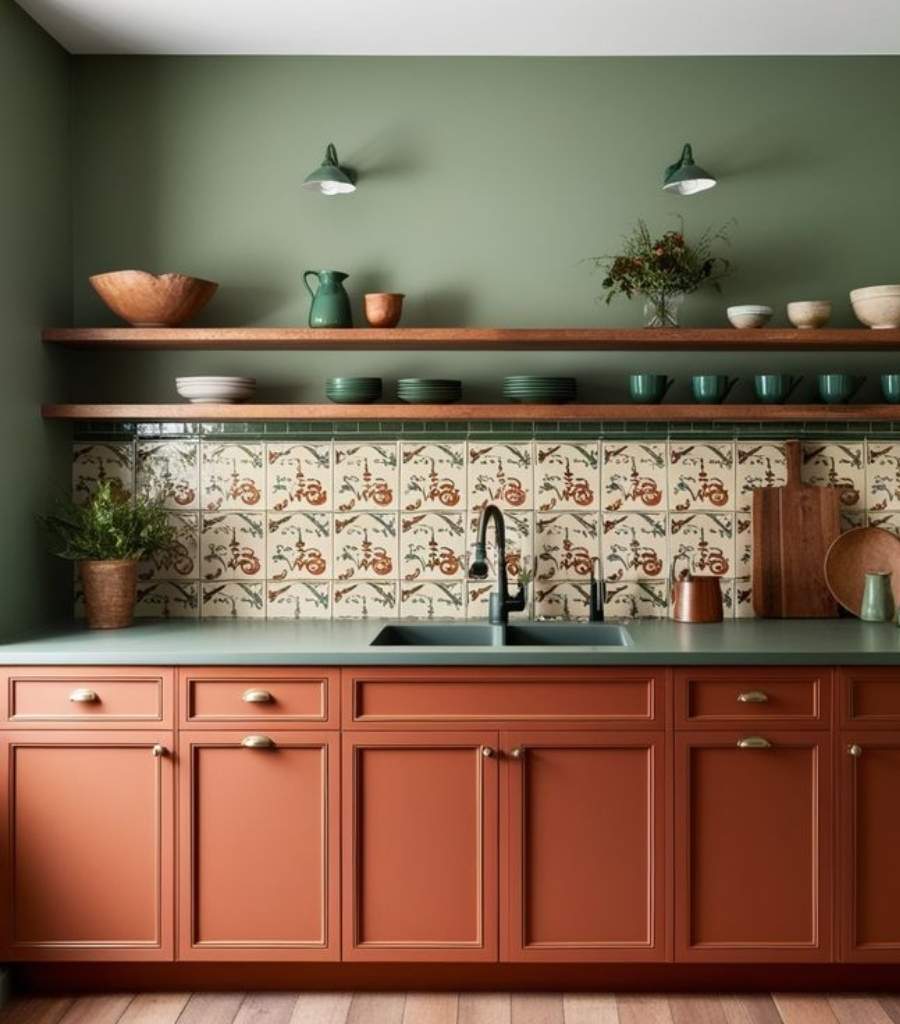
Bohemian kitchens are built on the idea of joyful accumulation. Nothing matches perfectly. Everything connects through feeling.
Terracotta and sage are ideal boho pairing colors because neither is rigid. Terracotta exists in a spectrum from pale coral and pink undertones all the way to deep rust. Sage moves from silvery grey-green to warm, almost olive tones. Within that range, you can mix freely.
Terracotta kitchen accessories ideas work brilliantly here, woven baskets, ceramic crocks, hand-painted tiles used as occasional splashback inserts, hanging dried botanicals. The more layered and personal, the better. This is a style that rewards individual expression over interior design perfection.
12. Rustic Industrial Sage & Terracotta
This hybrid style is increasingly popular in converted spaces, barn conversions, former commercial buildings, urban apartments with exposed brickwork. It combines the rawness of industrial design with the warmth of rustic materials.
Sage cabinetry with a brushed metal handle, set against a terracotta-rendered wall. Exposed brick in warm reddish tones that echo the terracotta palette. A kitchen dining table styling moment where raw oak meets terracotta-toned ceramics.
The beauty of this style is its tolerance for imperfection. Things don’t need to align perfectly. Textures can clash slightly. It’s a kitchen that looks like real life happened in it, which is exactly the point.
13. Bold Terracotta Island with Sage
Revisiting the island concept, but pushing it further. Not just a terracotta-colored island, but a truly sculptural one. A bespoke kitchen island design with a handcrafted quality, perhaps with fluted detailing, arched cabinet doors, or a waterfall worktop edge in a warm stone.
Sage green on the perimeter cabinetry creates the ideal backdrop. It recedes visually, allowing the terracotta island to hold the room’s attention without competition. This is how you create a luxury kitchen focal point that doesn’t feel forced.
For very large kitchens, a copper splashback design behind the range adds another layer of warmth and materiality. Copper, terracotta, sage, it’s a trio that keeps delivering.
14. Luxe Sage & Terracotta
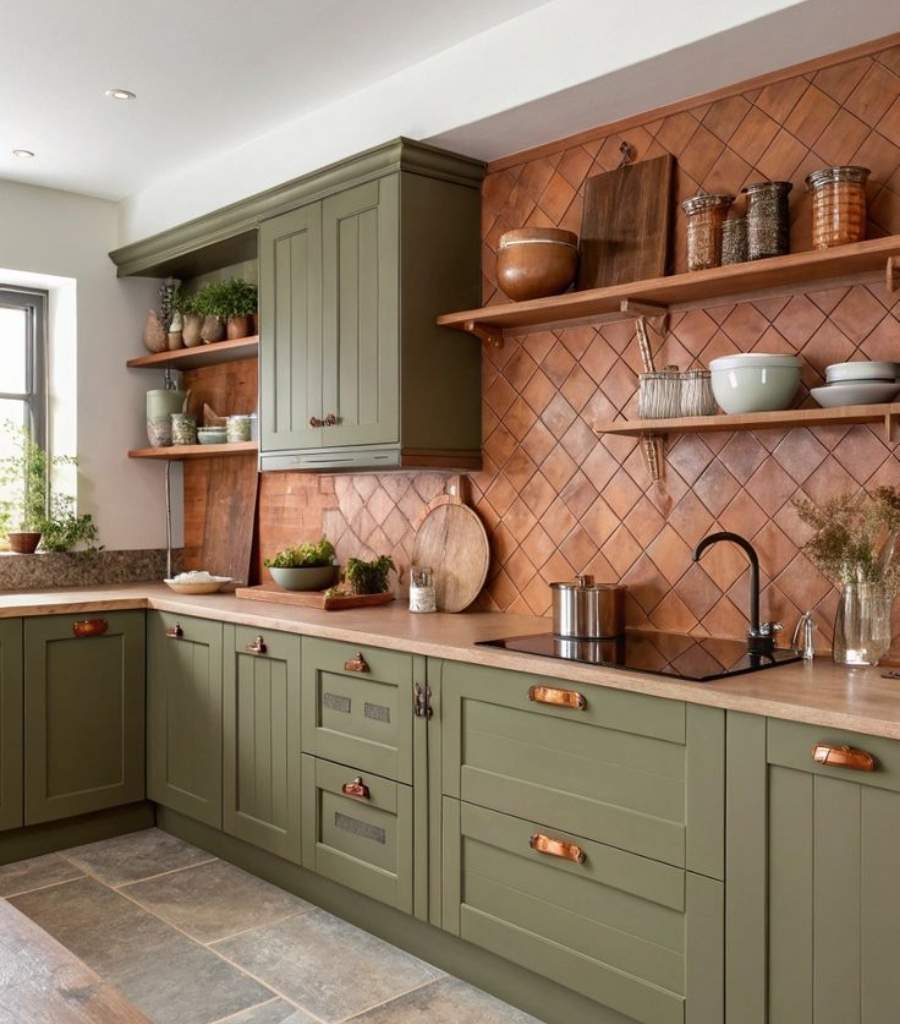
Luxury in a kitchen isn’t always about marble and gold. Sometimes it’s about material depth. The sense that every surface was chosen for a reason and made with care.
A luxe sage and terracotta kitchen achieves this through layering. Sage cabinetry with a deep, almost liquid sheen, not gloss exactly, but a semi-reflective finish that catches light differently depending on where you stand. Terracotta introduced through a handcrafted zellige tile splashback, with its inherent variation and imperfection becoming the luxury detail itself.
Metallic copper kitchen trend elements, a copper range hood, copper inlay on cabinet handles, a burnished copper finish on the tap, complete the picture. This isn’t a kitchen assembled from a catalogue. It’s a kitchen composed like a piece of design work.
15. Sage Green Elegance with Terracotta Pops
Elegance and pops of color aren’t usually comfortable neighbors. But terracotta is warm enough to sit within a refined palette without disrupting it.
A predominantly sage green kitchen, refined, calm, beautifully made, can absorb terracotta accents without losing its composure. Terracotta accent cabinet ideas work well here: a single pantry cabinet painted in a deeper terracotta tone, or a bank of open shelves with terracotta ceramic vessels arranged deliberately.
The key is confidence in the placement. Don’t scatter terracotta randomly. Give it a specific home within the kitchen and let it live there with intention.
16. Terracotta & Sage Cottage Kitchen
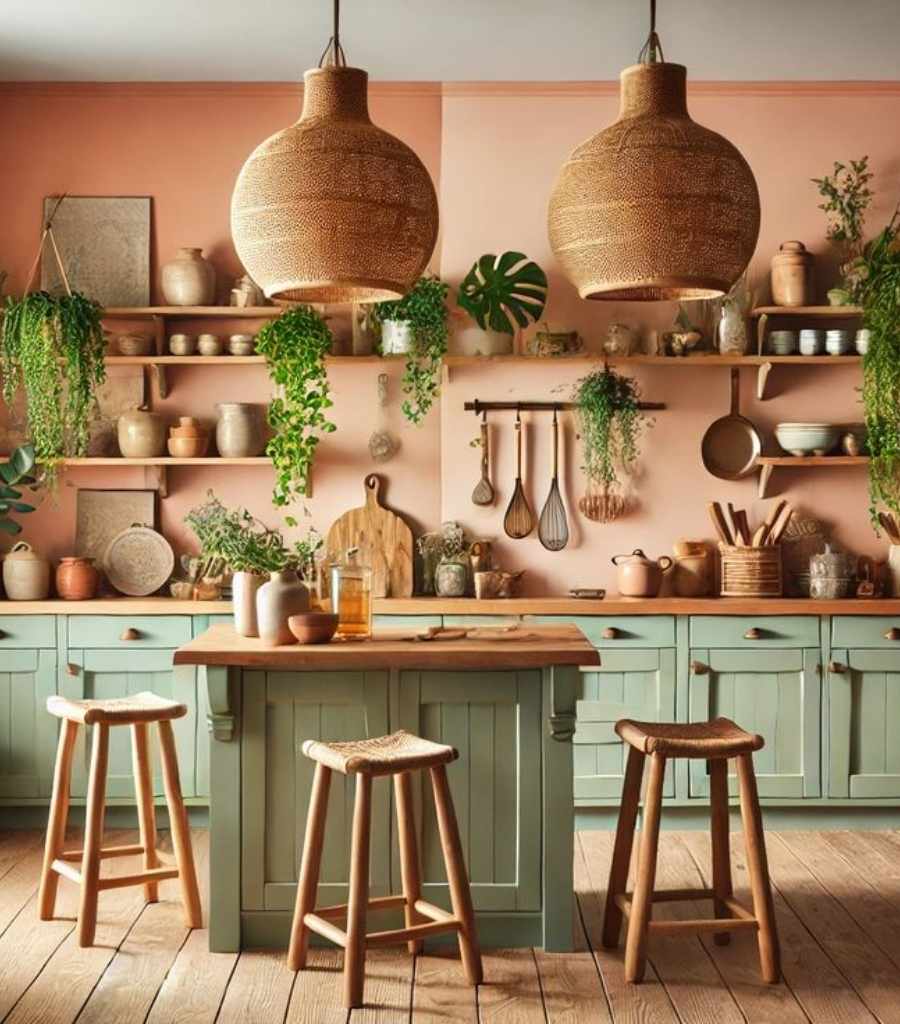
Cottage kitchens have a particular warmth that modern design often struggles to replicate. It comes from scale, lower ceilings, smaller windows, a general sense of coziness, and from materials that feel genuinely old.
Terracotta and sage work perfectly within this framework. Sage green cabinetry with a soft shaker profile. Terracotta floor tiles, slightly uneven, in a warm clay tone. A terracotta-painted recess around the range cooker, framed by sage cabinetry on either side. It’s a kitchen that feels like it grew there.
Classic kitchen styling principles apply here, no unnecessary complexity, no trend-chasing, just honest materials and considered proportions. The result is a space that will still feel right in twenty years.
17. Terracotta Accents in a Sage Palette
Think of this as the inverse of design idea two. Instead of a terracotta-led scheme with sage accents, here sage dominates and terracotta plays a supporting role. The result is different in character, calmer, more restrained, but equally compelling.
Full sage kitchen with terracotta introduced through hardware, ceramics, and soft furnishings. A terracotta linen roman blind. Terracotta-glazed cabinet pulls. A single row of terracotta zellige tiles used as a narrow horizontal band in the splashback.
These are small interventions with significant impact. They prevent the sage palette from feeling one-dimensional. They add warmth without adding visual noise.
18. Modern Mediterranean Kitchen
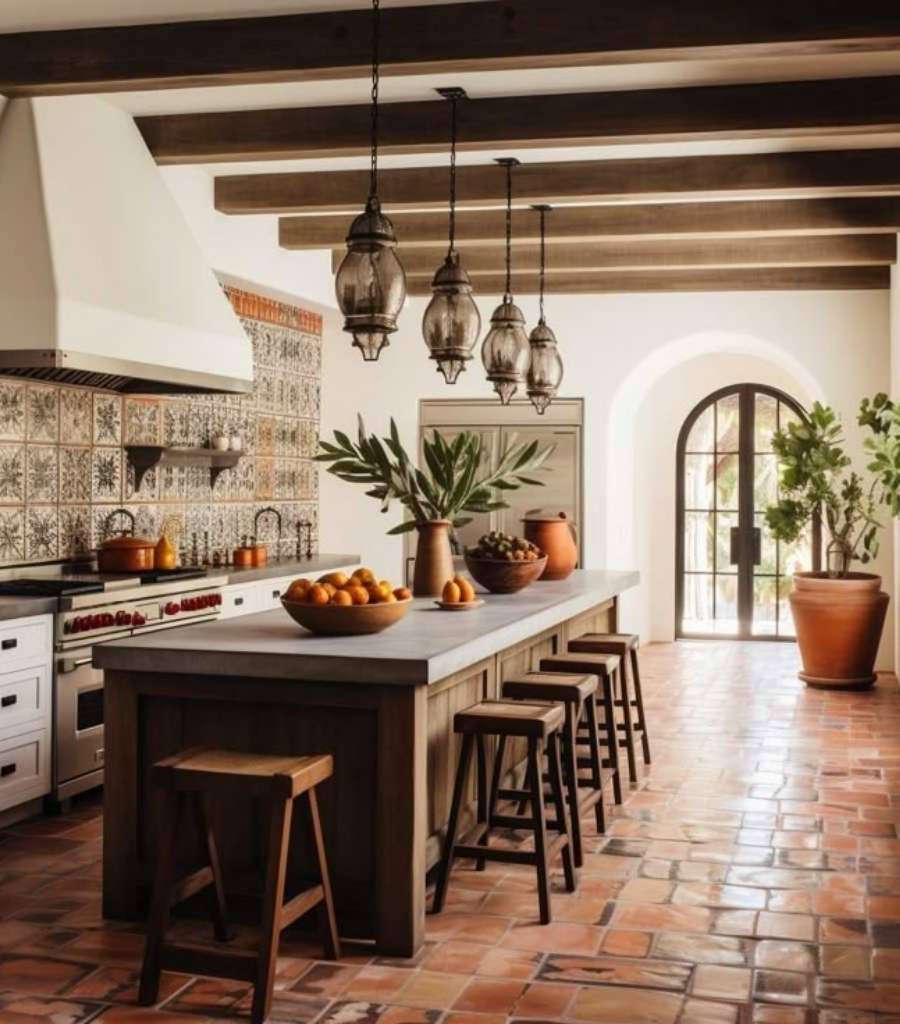
The Mediterranean kitchen is having a genuine cultural moment. It references sun-soaked interiors from southern Italy, Greece, Spain, and Portugal, places where terracotta is architectural rather than decorative.
A modern interpretation keeps the material honesty of those references while updating the execution. Smooth terracotta plaster walls or large-format terracotta tiles. Deep blue slab doors on a run of cabinetry, navy, cobalt, or indigo, creating that terracotta and navy kitchen palette that feels genuinely Mediterranean without being pastiche.
Copper kitchen cabinets or copper splashback design behind an open flame cooker add the final authentic touch. This kitchen understands where it comes from.
19. Farmhouse Sage & Terracotta
The farmhouse kitchen is one of the most enduring design concepts precisely because it prioritizes function and warmth over fashion. It’s a kitchen that works hard and looks good doing it.
Sage green cabinetry with a subtle linen-like texture. A large terracotta-toned butler’s sink. Open shelves displaying terracotta kitchen accessories, canisters, jugs, baking dishes in earthy clay tones. A worn terracotta floor that has clearly absorbed years of family life.
Terracotta kitchen mood inspiration here is about comfort rather than perfection. This is a kitchen for feeding people, gathering around, and staying in longer than you planned.
20. Terracotta Panels & Sage Simplicity
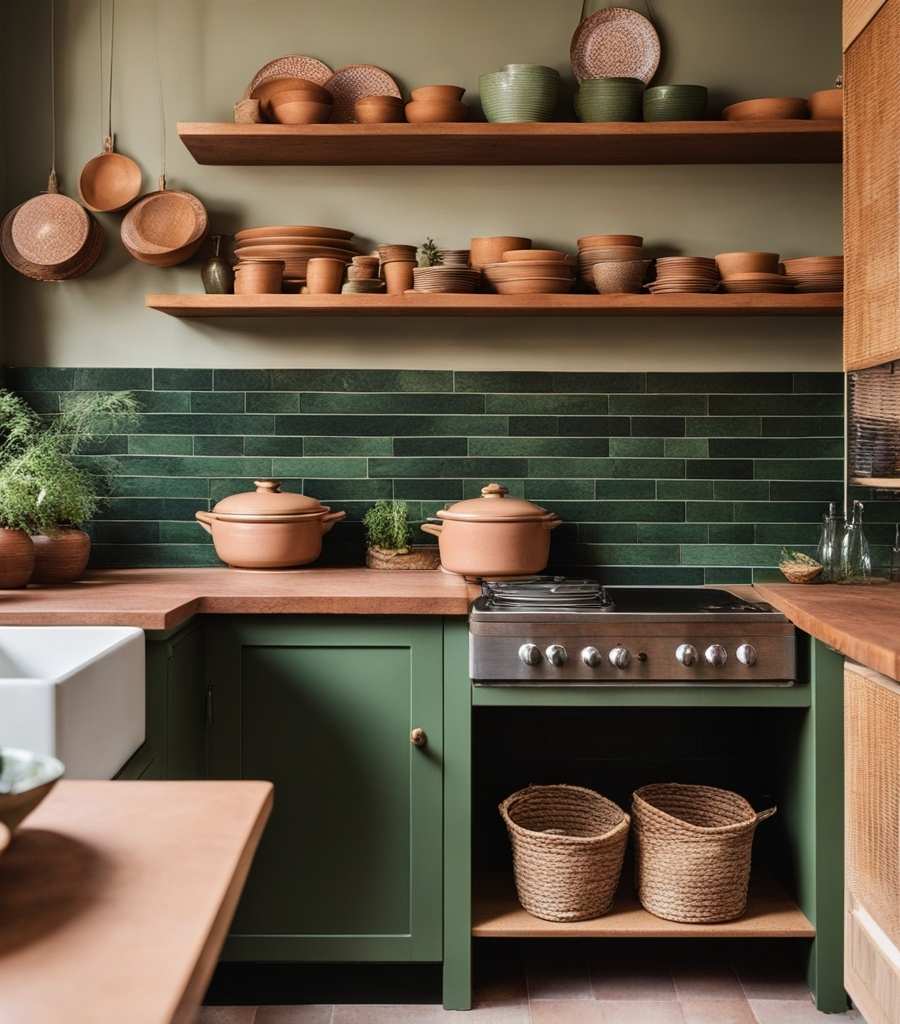
Architectural panels are a current high-end kitchen color trend worth exploring. Instead of standard cabinetry, sections of wall or large cabinet fronts are treated as panel features, in terracotta-toned plaster, textured ceramic, or even upholstered in natural linen.
Against the simplicity of sage green cabinetry, a terracotta panel wall or feature section creates an art-like quality. It’s a kitchen that references gallery and hospitality design while remaining functional and liveable.
This is how to use terracotta in kitchen design at its most architectural. Not just color, but material and form.
21. Open-Concept Terracotta & Sage Harmony
Open-concept spaces demand more from a color palette. When the kitchen flows into a dining area and then into a living space, the colors need to work at multiple distances and in multiple lighting conditions.
Terracotta and sage manage this well. Terracotta reads consistently across distances, it’s warm at close range and warm from across a room. Sage, with its muted quality, doesn’t overpower adjacent living spaces. Together, they create a cohesive flow that feels intentional rather than accidental.
The eat-in kitchen concept benefits especially from this. A kitchen dining table styling approach where the table sits between kitchen and living zones, with terracotta and sage present in both areas, creates a genuinely unified living environment.
22. Small Kitchen Terracotta & Sage Space-Saver
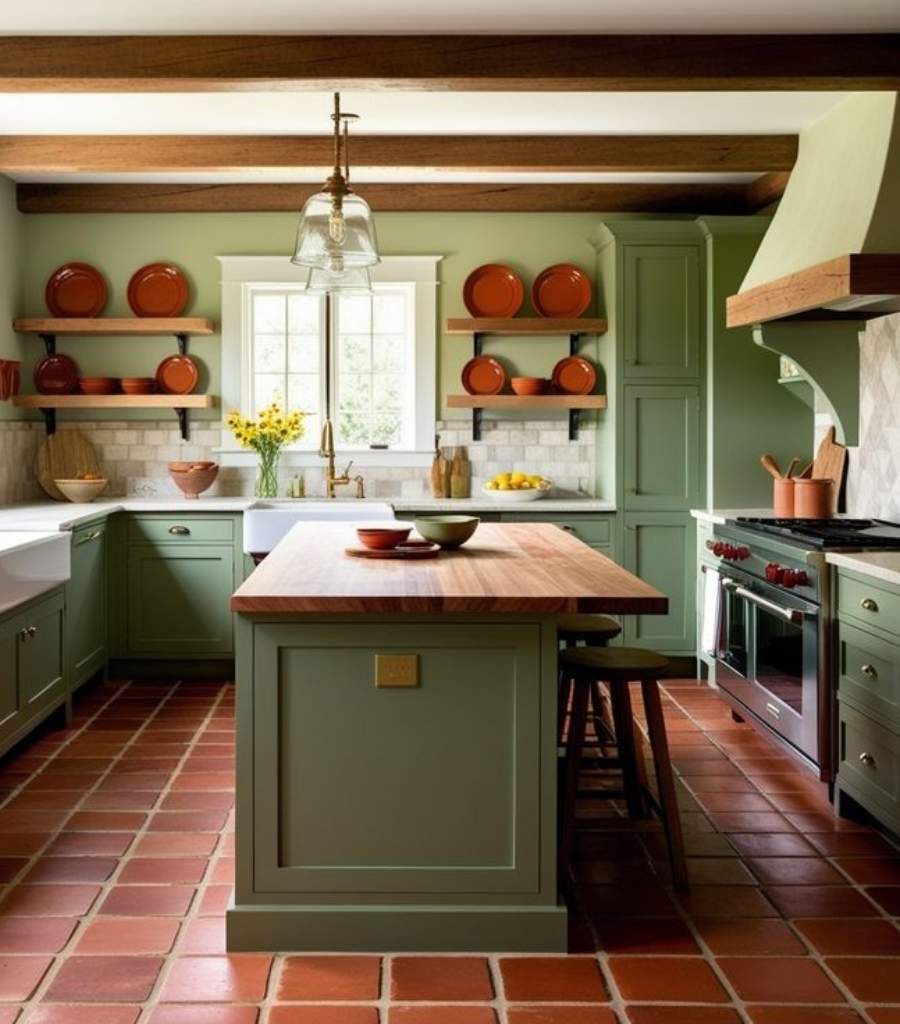
Small kitchens have different design rules. And one of the biggest misconceptions is that dark, warm colors make small spaces feel smaller. They don’t, if used well.
Terracotta on a single wall or as a splashback in a small kitchen adds depth and warmth without boxing you in. Sage on the cabinetry keeps things light and fresh. The combination actually works better in small kitchens than it does in large ones because the warmth of terracotta is more concentrated, more immediate.
Reflective metal surfaces, copper handles, a small copper splashback panel, amplify available light and prevent the space from feeling dim. This is warm modern kitchen interiors thinking applied practically.
23. Terracotta Backsplash with Soft Sage Cabinetry
The backsplash is often an afterthought. It shouldn’t be. In a terracotta and sage kitchen, the backsplash is where the color story really gets told.
A terracotta backsplash, whether glazed zellige, matte subway tile, or encaustic cement tile, brings warmth right to the zone where cooking happens. Against soft sage cabinetry, it creates a focused area of color and texture that draws the eye without overwhelming the room.
This combination also photographs exceptionally well, which matters more than it perhaps should in 2026. But beyond the aesthetics, it’s simply a pleasing place to cook in front of.
24. Vintage-Inspired Sage & Terracotta Charm
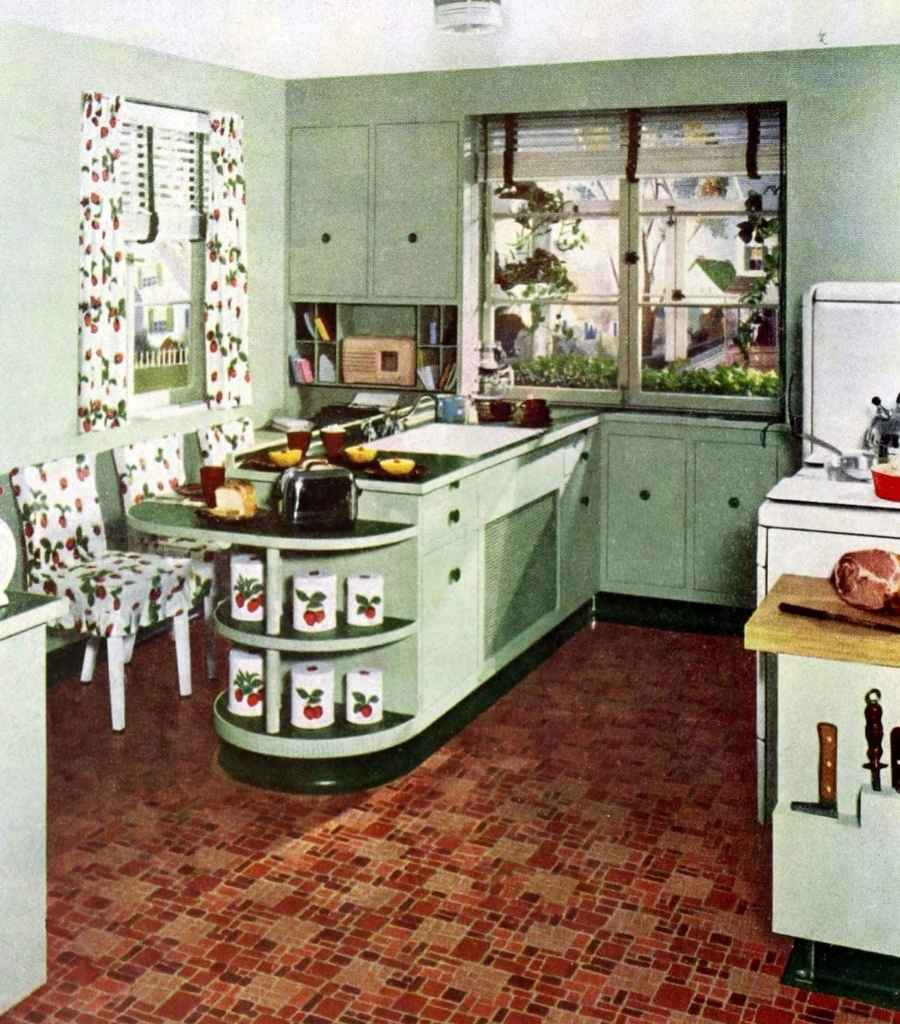
Vintage kitchens reference a specific era, roughly the 1920s through 1950s, when kitchens were functional, colorful, and built to last. Terracotta and sage were both present in those interiors, and returning to them feels like homecoming rather than nostalgia.
Sage green cabinetry with beaded detailing and cup-pull hardware. Terracotta-toned tiles in a small, repeat pattern. A freestanding dresser in a complementary warm neutral. Terracotta velvet dining chairs around a scrubbed pine table.
This is vintage-inspired design that doesn’t feel like a costume. It feels like a genuine choice made by someone who values craft and history.
25. Contemporary Terracotta Flooring with Sage Layers
The final idea is also one of the most transferable. Terracotta flooring, contemporary large-format tiles in a refined terracotta tone, works in virtually any kitchen style. It’s the foundation that everything else builds from.
Layer sage green cabinetry above. Add warm neutral kitchen colors through worktops and wall paint. Introduce copper or antique brass hardware to connect the floor tone with the upper elements.
This approach suits modern kitchen ideas where the brief is to bring warmth without sacrificing the clean lines and considered proportions of contemporary design. The terracotta floor anchors the room. The sage layers above keep it breathing and alive.
FAQ’s
What colors pair best with terracotta in a kitchen?
Sage green, navy blue, warm white, and deep forest green all work beautifully with terracotta. Antique brass and copper hardware enhance the earthy warmth.
Is terracotta a good color for small kitchens?
Yes, when used thoughtfully. A terracotta backsplash or single accent wall adds warmth without making a small kitchen feel cramped, especially when paired with lighter sage cabinetry.
How do I use terracotta in a modern kitchen without it looking dated?
Keep the forms clean and the finishes matte. Pair terracotta tones with contemporary sage cabinetry and metallic accents to maintain a modern, high-end feel.
Can terracotta and sage green work in a rental kitchen?
Absolutely. Accessories, textiles, and removable elements, terracotta pots, sage-toned blinds, ceramic vessels, let you build the palette without any permanent changes.
What flooring works best with a terracotta and sage kitchen?
Terracotta floor tiles are the natural choice, but warm oak timber, brushed limestone, and warm-toned concrete all work well alongside sage cabinetry and terracotta accents.

Ethan Cole is a home improvement content specialist and industry researcher with years of experience analyzing residential trends, renovation strategies, and property enhancement insights. He collaborates with homeowners, designers, and professionals to deliver practical, trustworthy guidance. His work focuses on helping readers make confident, informed decisions to improve their living spaces.